Short answer: Watch types are classified along three axes: by movement (quartz, manual-wind mechanical, automatic, solar), by display (analog, digital, ana-digi) and by use (dress, sports, dive, pilot, chronograph). Every watch carries one trait from each axis; an everyday women’s watch, for example, is usually a quartz, analog dress watch.
There is no single number that answers “how many types of watches are there?”, because most lists mix different criteria: a dive watch is a type of use, an automatic is a type of movement and a digital watch is a type of display. This guide separates watch types into those three axes, defines each type in one sentence and uses tables to show which type suits which use.
The 30-second summary
- The movement decides how a watch runs: a battery (quartz), a mainspring (mechanical, automatic) or light (solar).
- The display decides how it shows the time: hands (analog), numerals (digital) or both (ana-digi).
- The type of use describes the setting it was designed for: office and evening (dress), water (dive), timing (chronograph).
- For everyday wear, the lowest-maintenance combination is a quartz analog watch.
- An astronomical clock is not a wristwatch type; the term describes tower and table clocks that display celestial positions.
What are the types of watches? A three-axis classification
Short answer: The clearest answer to “what are the types of watches” is a three-axis table. The movement axis defines the energy source, the display axis defines how time is read and the use axis defines the setting the watch was designed for. One watch sits on all three axes; the types complement rather than replace each other.
| Axis | Types | What it determines |
|---|---|---|
| Movement | Quartz, mechanical (manual-wind), automatic, solar | Energy source, maintenance, case thickness |
| Display | Analog, digital, ana-digi (hybrid display) | How time is read and how the dial is laid out |
| Use | Dress, sports, dive, pilot, chronograph, field | Design choices such as case, strap and water resistance |
| Design (extra axis) | Case shape, dial colour, strap type, plating colour | How the watch looks on the wrist and works with your style |
Search results for “types of watches” also list wall clocks, hourglasses and sundials. This guide focuses on wristwatch types; historical timekeepers are covered only briefly under the astronomical clock heading.
What are the types of watch movements?
Short answer: There are four main types of watch movement: quartz, mechanical (manual-wind), automatic and solar. Quartz runs on a battery and needs the least maintenance. Mechanical and automatic watches run on a mainspring; the difference is whether the spring is wound by hand or by the motion of the wrist. A solar watch charges with light.
- A quartz watch is a watch that uses battery power to make a quartz crystal vibrate and turns that vibration into time. In wristwatches the crystal usually vibrates 32,768 times per second. For the full working principle, see our guide to what a quartz watch is.
- A mechanical (manual-wind) watch is a watch that turns the energy of a hand-wound mainspring into regular steps through gears and a balance wheel; the ticking sound comes from the escapement.
- An automatic watch is a mechanical watch whose mainspring is wound by a semicircular rotor that turns with the motion of the wrist. If it is not worn enough, it stops.
- A solar watch is a watch that converts light into electricity with a solar cell and stores that energy in a rechargeable cell.
| Movement | Energy source | Maintenance | Case thickness | Best suited to |
|---|---|---|---|---|
| Quartz | Battery | Battery replacement; life varies by model | Allows a slim case | Anyone who wants an accurate, low-maintenance everyday watch |
| Mechanical (manual-wind) | Hand-wound mainspring | Regular winding, periodic servicing | Medium | Those who value movement craftsmanship |
| Automatic | Mainspring wound by wrist motion | Stops if not worn; periodic servicing | Usually thicker because of the rotor | Daily wearers who love mechanical craft |
| Solar | Cell charged by light | Needs regular exposure to light | Varies by model | Those who would rather not change batteries |
In practice: There is a technical reason quartz is so common in women’s watches: a quartz module allows a slim case, while the rotor of an automatic movement adds thickness. For battery life and the signs of a dying battery in a quartz watch, see the table in how long a watch battery lasts.
What is the difference between analog, digital and ana-digi watches?
Short answer: An analog watch shows the time with hour and minute hands and indices; a digital watch shows it as numerals on an LCD or LED screen; an ana-digi watch combines both on one dial. The display type is independent of the movement: a quartz watch can be either analog or digital.
- Analog watch — lets you read time as a proportion at a glance (“quarter to”). It is the basis of a classic, elegant look; the vast majority of women’s watches are analog.
- Digital watch — gives the exact minute and second as numerals and easily adds functions such as an alarm, stopwatch or backlight. It is common for sport and outdoor use.
- Ana-digi watch — places a small digital screen inside an analog dial, adding functions while keeping the classic look.
Smartwatches also use a digital screen, but because of notifications and health tracking they are treated as a separate category. Watches that keep hands while counting steps in the background are called hybrid watches.
What are the types of wristwatches by use?
Short answer: The main wristwatch types by use are dress (classic), sports, dive, pilot, chronograph and field watches. Each type grew out of the needs of a specific setting: the dive watch for timing underwater, the pilot watch for legibility in the cockpit and the dress watch for slipping under a shirt cuff.
| Type | Defining feature | Typical use |
|---|---|---|
| Dress (classic) watch | Slim case, clean dial, few functions; leather or slim steel strap | Office, evening events, special occasions |
| Sports watch | Robust case, higher water resistance, rubber or silicone strap | Training, outdoors, heavy daily wear |
| Dive watch | Rated for diving to at least 100 m under ISO 6425; unidirectional rotating bezel; legible in the dark | Diving and water sports |
| Pilot watch | Large, high-contrast dial; oversized crown that can be turned with gloves | Aviation heritage; everyday wear |
| Chronograph | Stopwatch function; sub-dials and start-stop pushers | Measuring elapsed time |
| Field watch | Simple, highly legible dial; tough and light build | Everyday and outdoor wear |
What is a dress watch?
A dress watch (classic watch) is a watch with a slim case and a clean dial, designed to go with formal and smart clothing. It favours proportion over display and slips easily under a cuff. Most women’s watches come close to this definition.
What is the difference between a dive watch and a sports watch?
A dive watch is a tool watch tested for diving against a specific standard; ISO 6425 requires resistance to at least 100 metres and a device for monitoring time, usually a unidirectional rotating bezel. A sports watch is a broad category that is robust but not bound by such a standard.
What are a pilot watch and a chronograph?
A pilot watch is a watch designed with a large, high-contrast dial so it can be read quickly in the cockpit. A chronograph is a watch that adds a stopwatch to the time display and starts and stops elapsed-time measurement with pushers. A chronograph is a function as much as a type; it can also appear on a dress or pilot watch.
How are watches classified by design?
Short answer: By design, watches differ in case shape (round, square, rectangular, oval), dial colour and layout, strap type (steel, leather, mesh) and plating colour (silver, gold, rose gold, two-tone). This axis is about style, not engineering; it decides how the watch sits on the wrist.
- Case shape: A round case is the most timeless form; square and rectangular cases look larger at the same millimetre size.
- Dial: White, silver and mother-of-pearl dials are the easiest to read; green, black and coloured dials add character. Roman numerals, stone-set or minimal indices give the same movement a completely different identity.
- Strap: Steel and mesh straps stand up to daily wear; leather is lighter and more classic.
- Plating colour: Silver, gold and rose gold tones decide how the watch works with your jewellery; two-tone watches work with both metal families.
Additional indications such as a date, moon phase or second time zone (GMT) are called complications in watchmaking. Complications are not a separate watch type; they are functions that can be added to any type. To compare models with design filters, browse our women’s watches. For the names of parts such as the case, bezel, crown and lugs, see our watch parts and names guide.
What is an astronomical clock, and is it a wristwatch type?
Short answer: An astronomical clock is a clock with special mechanisms and dials that display the relative positions of the Sun, the Moon, the zodiac constellations and sometimes the planets. It is not a wristwatch type; the term is mostly used for tower, church and table clocks.
The best-known example is the Prague Astronomical Clock (Orloj), completed in 1410 and still working today. On wristwatches, astronomical information most often appears as a moon-phase indicator, which is a complication rather than a watch type. Astronomical clocks appear in “types of watches” lists because those searches cover historical timekeepers and wristwatches together.
Which type of watch is best for everyday wear?
Short answer: The most practical watch type for everyday wear is a quartz watch with an analog display, a stainless steel case and water resistance of at least 3 ATM. Quartz needs no winding, an analog dial reads at a glance, and a steel case with mineral glass handles daily contact.
To find the type that suits your own routine, follow this order:
- Define the setting. Mostly office and evening events: a dress watch. Water sports: a dive watch. Mostly training: a sports watch.
- Be clear about maintenance. If you want no winding or servicing, choose quartz or solar; if you love mechanical craft, choose automatic.
- Choose the display. Analog for elegance and quick reading; digital for exact numerals and extra functions.
- Check water resistance. 3 ATM handles rain and hand washing, 5 ATM handles splashes and showers; the pool and the sea need a higher rating. The exact value is on the product page.
- Try it on. Case diameter and thickness decide how a watch sits on the wrist regardless of type; try the watch on if you can, or draw its size on paper and hold it against your wrist.
| Use | Suggested movement | Suggested type | What to look for |
|---|---|---|---|
| Office and everyday | Quartz | Dress / classic analog | Slim case, steel or mesh strap |
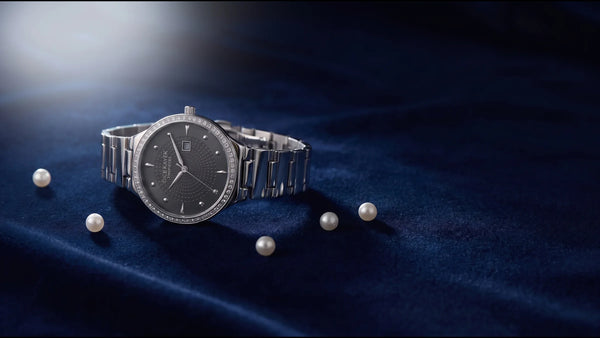
| Evening and special occasions | Quartz | Dress; stone-set or gold-tone dial | Clean dial, plating that matches your jewellery |
| Sport and outdoors | Quartz or solar | Sports / field watch | High water resistance, light strap |
| Diving and water sports | Quartz or automatic | Dive watch (ISO 6425) | Rotating bezel, legibility in the dark |
| Collecting and craft | Mechanical or automatic | Dress or chronograph | Regular wear and periodic servicing |
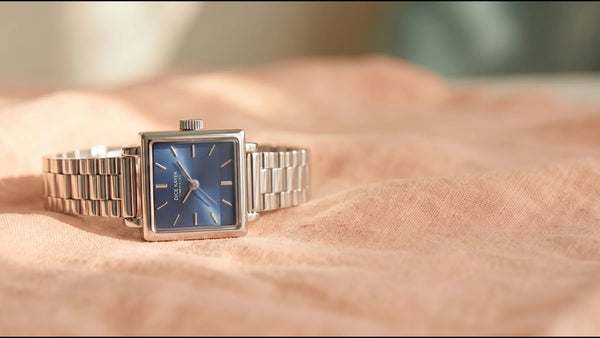
Some quartz analog women’s watches that stand out for office and everyday wear:
Which type of watch is best for women?
Short answer: The type women choose most often is a quartz dress watch with an analog display. A slim case is comfortable on the wrist and fits under a cuff, quartz needs no winding, and an analog dial is worn like jewellery. Still, the right type depends on how you live.
This is a starting point, not a rule. For someone who trains a lot, a sports watch may be better; for someone who loves mechanical craft, an automatic. Whatever the type, three points matter: a case diameter that suits your wrist, a plating colour that matches your jewellery and enough water resistance for daily contact with water.
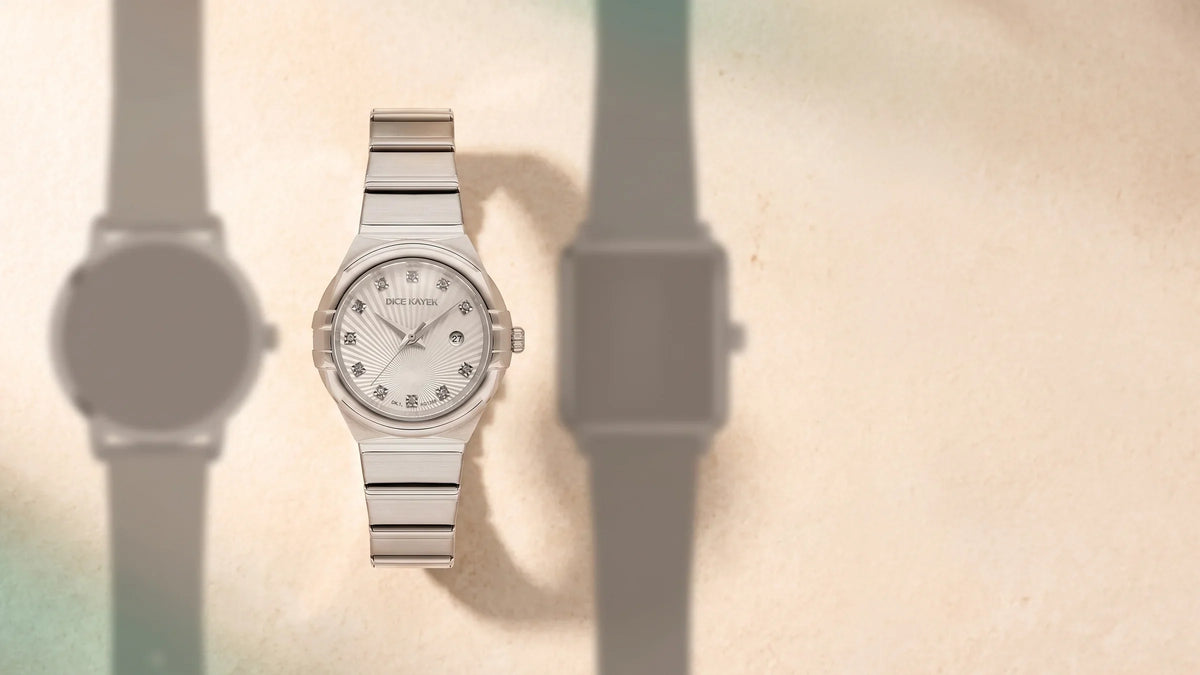
Dice Kayek Timepieces makes only quartz women’s wristwatches; mechanical, automatic, smart and men’s watches are not part of the collection. Every model has a solid stainless steel case and bracelet, hardened mineral glass and, depending on the model, 3–5 ATM water resistance; exact values are in the specifications table on each product page. The collections differ on the design axis: stone-set Lumina, gold-tone Solène, Roman-numeral Romana, two-tone Duo, colourful-dial Bloom and minimal Pura.
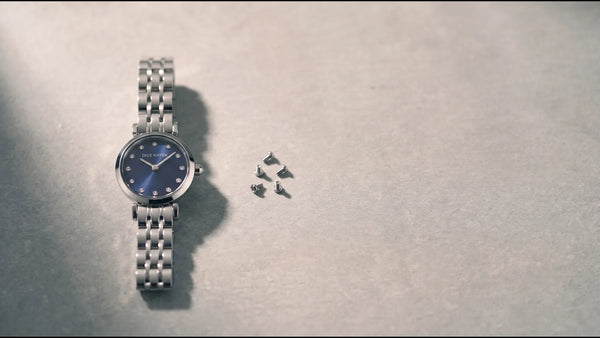
Different takes on the classic dress watch, with coloured and characterful dials:
Every watch carries a 2-year warranty against manufacturing defects; coverage and the service process are explained on the warranty and service page. If it does not sit on your wrist as you expected, you can return it within 30 days of delivery without giving a reason; see returns and exchanges for the conditions. Shipping within Türkiye is free and orders are dispatched within 2 business days at the latest (shipping and delivery).
Collection
Compare quartz women’s watches by design
Use the case colour, dial colour and case shape filters to narrow the types in this guide down to your own wrist.
Browse women’s watchesFrequently asked questions
What are the types of watches?
Watches are classified by movement into quartz, mechanical, automatic and solar; by display into analog, digital and ana-digi; and by use into dress, sports, dive, pilot, chronograph and field watches. Every watch carries one trait from each axis.
What are the types of wristwatches?
The main wristwatch types by use are dress (classic), sports, dive, pilot, chronograph and field watches. Smartwatches and hybrid watches are also treated as a separate category because of their functions.
How many types of watch movements are there?
Wristwatches have four main movements: battery-powered quartz, hand-wound mechanical, automatic wound by wrist motion and light-charged solar. Technically, an automatic watch is a sub-type of mechanical watch.
What is the difference between an analog and a digital watch?
An analog watch shows the time with hands and indices; a digital watch shows it as numerals on an LCD or LED screen. An analog dial reads as a proportion at a glance and looks classic; a digital screen gives exact numerals and extra functions such as an alarm or stopwatch.
What is the difference between a mechanical and a quartz watch?
A mechanical watch takes its energy from a wound mainspring and runs through gears and a balance wheel; a quartz watch runs on a battery and measures time with a vibrating quartz crystal. Quartz is generally the more accurate, lower-maintenance option; a mechanical watch stands out for its craftsmanship.
What is a chronograph watch?
A chronograph watch adds a stopwatch to the normal time display and starts and stops elapsed-time measurement with pushers on the side of the case. Small sub-dials on its face show the measured minutes and hours.
What is a dress watch?
A dress watch is a classic watch with a slim case, a clean dial and few functions, designed to go with formal and smart clothing. It slips easily under a shirt or jacket cuff and is usually worn on a leather or slim steel strap.
What is the difference between a dive watch and a sports watch?
A dive watch is a tool watch that, under the ISO 6425 standard, must resist diving to at least 100 metres and have a device for monitoring time, such as a unidirectional rotating bezel. A sports watch is a broad category that is robust but not bound by such a standard.
What is a pilot watch?
A pilot watch is designed with a large, high-contrast dial and an oversized crown that can be turned with gloves, so it can be read quickly and accurately in the cockpit. Today it is also worn as an everyday style with aviation heritage.
What is an astronomical clock?
An astronomical clock displays the relative positions of the Sun, the Moon, the zodiac constellations and sometimes the planets through special mechanisms and dials. It is not a wristwatch type; its best-known example is the Prague Astronomical Clock, completed in 1410.
Which type of watch is best for everyday wear?
For everyday wear, the most practical option is a quartz watch with an analog display, a stainless steel case and water resistance of at least 3 ATM. It needs no winding, reads at a glance and handles daily contact.
Which type of watch is best for women?
The type women choose most often is a quartz dress watch with an analog display; its slim case is comfortable and it is worn like jewellery. Still, the right type depends on your routine: for heavy training, a sports watch may suit better.
About this article
Written by: Dice Kayek Timepieces · Last updated: 9 October 2026
Movement, standard and historical details have been checked against the sources below. Technical values for Dice Kayek products (water resistance, case diameter) vary by model; exact values are on each product page.
Sources: