Short answer: Watch shapes describe the outline of a wristwatch case seen from above. Women’s watches come in six main watch shapes: round, square, rectangular, octagonal, cushion and oval. A round case is balanced and timeless; a rectangular case makes the wrist look longer; a square case looks graphic and modern; octagonal, cushion and oval cases sit between angular and soft. Shape alone does not decide: case size and wrist width should be read together.
This guide explains how each watch shape looks on the wrist, how size is read on angular cases, how shape pairs with outfits and occasions, and what to check when you try a watch on.
Summary in 30 seconds
- Six main watch shapes: round, square, rectangular, octagonal, cushion and oval.
- Round is the most common and most versatile shape; it suits every wrist and occasion.
- Rectangular makes the wrist look longer; square looks larger than round at the same size.
- On angular cases, size is the side length or width × length, not the diagonal.
- Once you pick a shape, choose the size by wrist width and try it on.
What are the different watch shapes?
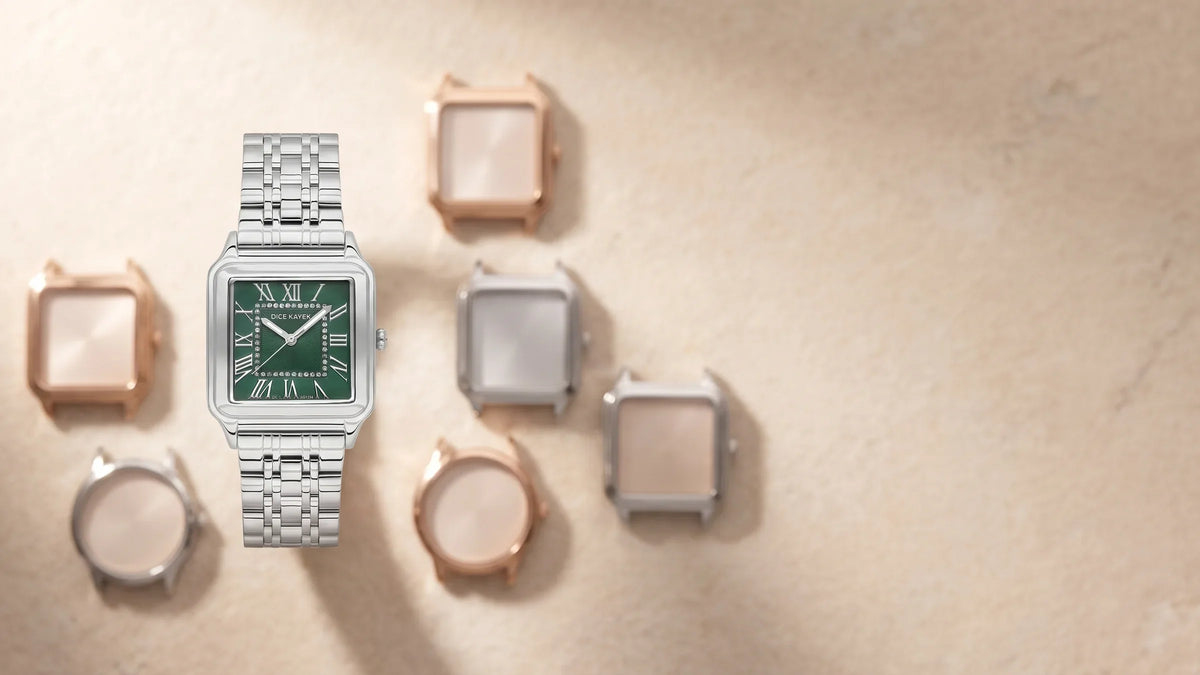
Short answer: Watch shapes fall into six main case forms: round, square, rectangular, octagonal, cushion and oval. These forms define the outer line of the case, and the dial usually follows the case. Each shape leaves a different visual impression on the wrist and stands out in different settings.
| Watch shape | Look | Effect on the wrist | Best suited to |
|---|---|---|---|
| Round | Balanced, soft lines | Predictable on every wrist width | Everyday, office, evening |
| Square | Graphic, architectural lines | Looks larger than round at the same size | Modern and minimal outfits |
| Rectangular | Vertical, slim and long | Makes the wrist look longer and slimmer | Office, classic and evening |
| Octagonal | Angular yet balanced | Gives a distinctive presence | Modern and sporty-chic |
| Cushion | Square with rounded corners | Softer than square, more character than round | Everyday and vintage-inspired |
| Oval | Soft and elongated | Runs along the wrist, sits well on slim wrists | Elegant, jewellery-like wear |
The Dice Kayek collection includes models in all six shapes; you can browse them by form on the watches by case shape page.
Why is the round case the most common watch shape?
Short answer: The round case is the first form the wristwatch inherited from the pocket watch, and it is still the most common watch shape today. Because a round case has no corners, it creates a soft line on the wrist, joins the bracelet naturally and looks predictable on every wrist width. That makes it the safest choice for a first watch.
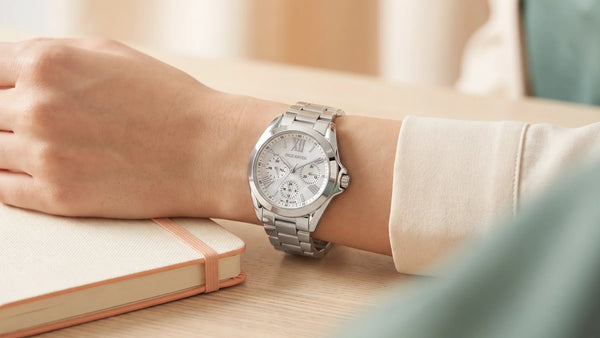
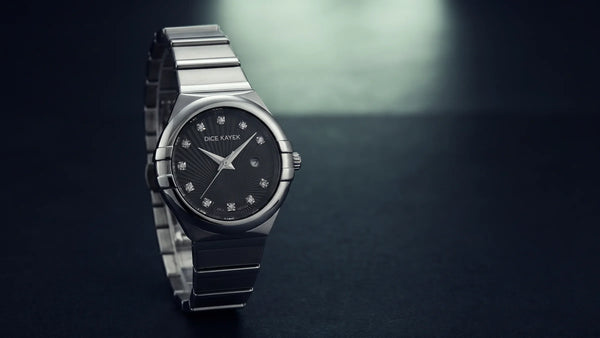
A round case has a single measurement: the case diameter, measured from one edge of the case to the other (usually excluding the crown). On round models, the millimetre figure on the product page therefore reflects how the watch looks on the wrist. Details such as a classic dial, Roman numerals or a stone-set bezel look most balanced on a round case.
Highlights among round models you can wear every day:
All models are on the round case women’s watches page.
How do square watches look on the wrist?
Short answer: Square watches, with four equal sides, leave a graphic and modern impression on the wrist. Because the corners enlarge the visual area, a square watch looks larger than a round watch of the same millimetre size. On a slim wrist a small square model works well; on average and wider wrists a medium size looks balanced.
Square watches fall into two main groups: sharp-cornered square and square with rounded corners. A sharp-cornered square looks more architectural and assertive; a rounded square comes close to a cushion case and looks softer. A square case creates a minimal look with a plain dial and a jewellery-like effect with a stone-set bezel.
Square watches complement straight lines in clothing: blazers, shirts, straight-cut trousers and minimal dresses. With busy prints and ruffles, a round or oval shape gives a softer balance.
A selection of square models with different dial colours:
All models are on the square case women’s watches page.
Does a rectangular watch suit a slim wrist?
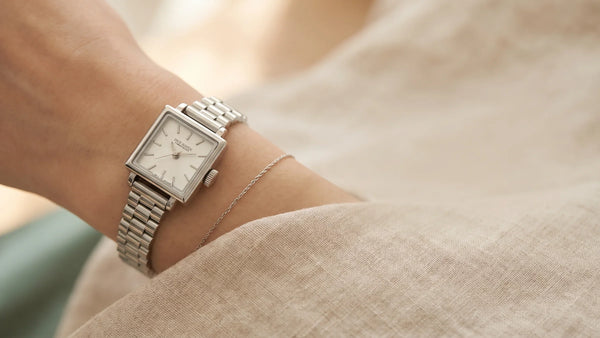
Short answer: Yes, a rectangular watch is one of the shapes that best suits a slim wrist. Because a rectangular case runs along the wrist, it takes up little width and makes the wrist look longer and slimmer. On a slim wrist, a narrow and short rectangular case keeps the case from overhanging the wrist.
A rectangular case has two measurements: width (short side) and length (long side). Comfort on the wrist is usually decided by the length; if the length exceeds the top surface of the wrist, the ends of the case overhang. The rectangular form has a classic, elegant presence that suits office and evening outfits, and with a slim steel bracelet it can also be worn like jewellery.
Rectangular models that move easily from day to evening:
All models are on the rectangular case women’s watches page.
What is an octagonal watch?
Short answer: An octagonal watch is a wristwatch whose case or bezel has eight sides. An octagonal case has an angular character, but with more sides it never looks as hard-edged as a square. It is a good in-between shape for anyone who wants a distinctive, modern look.
On octagonal watches the corners are sometimes only on the bezel and sometimes along the whole case line. On the wrist it creates an effect between square and round: with a plain dial it works at the office, with a coloured dial it stands out in everyday outfits. On a slim wrist, a small octagonal model looks more balanced.
What do cushion and oval cases mean?
Short answer: A cushion case is a square form with clearly rounded corners, named after the puffed outline of a cushion. An oval case is a round case elongated along the wrist. Both shapes sit between angular and soft, and both sit comfortably on slim wrists.
A cushion case combines the character of a square case with the softness of a round one, adding a warm, vintage-inspired feel to everyday outfits. An oval case offers an elegant, jewellery-like look and can be worn like a bracelet on a slim band. Oval cases are also often measured as width × length.
How is watch size read on angular cases?
Short answer: On a square case, size is the length of one side; on rectangular and oval cases, size is given as width × length (at Dice Kayek, for example, 18 × 28 mm). On angular cases, “diameter” does not mean the diagonal; the diagonal is always longer than the side and makes the case seem larger than it is.
| Watch shape | How size is given | What to watch for |
|---|---|---|
| Round | One value: case diameter (mm) | The crown is usually not included |
| Square | Side length (mm) | Do not confuse with the diagonal; looks larger than round at the same size |
| Rectangular | Width × length (mm) | Length should not exceed the top of the wrist |
| Oval | Width × length (mm) | The long axis runs along the wrist |
| Octagonal and cushion | Width from side to side (mm) | Corners enlarge the visual area |
Besides the case size, the distance from one strap attachment to the other (lug-to-lug) shows whether the case will overhang the wrist. Choosing case size by wrist circumference is covered with a table in the how to choose a women’s watch guide. The exact size of each Dice Kayek model is in the technical specifications on its product page.
Which watch shape suits which wrist?
Short answer: On a slim wrist, rectangular, oval and small round cases give the most balanced result; on an average wrist, all six shapes work comfortably; on a wider wrist, square, octagonal and cushion cases look proportionate. This is a starting point rather than a rule; trying the watch on makes the final decision.
Follow these steps when trying a watch shape on your wrist:
- Wear the watch just above the wrist bone: this is where it sits in everyday use.
- Look at the edges of the case: the ends of the case should not overhang the top of the wrist.
- Turn your wrist slightly: angular cases become more noticeable as the wrist turns.
- Try it with a sleeve: check that it slips easily under a shirt or jacket cuff.
- See it with your jewellery: check how the shape works with the line of a bracelet or ring.
If a model you bought online does not look the way you expected on your wrist, Dice Kayek offers returns and exchanges within 30 days of delivery (except watches engraved on the case back).
How does watch shape pair with outfits and occasions?
Short answer: When the watch shape follows the lines of the outfit, the look feels coherent. Square and rectangular cases stand out with straight-cut, minimal clothing; round and oval cases with soft, romantic pieces; octagonal cases with sporty-chic outfits. These pairings are suggestions; personal style always comes first.
| Setting or style | Watch shape that stands out | Why? |
|---|---|---|
| Office and business meetings | Rectangular, round | Clean lines, comfortable under a cuff |
| Minimal and monochrome outfits | Square, rectangular | Complements straight lines |
| Evening and special occasions | Oval, stone-set round | Looks elegant, like jewellery |
| Everyday and weekends | Cushion, octagonal, round | Relaxed with character |
| Vintage-inspired style | Cushion, rectangular | Recalls classic watch forms |
Which watch suits you by style archetype is covered in detail in the women’s watch models style guide.
Which watch shape is considered classic?
Short answer: The round case is the most classic watch shape, because the wristwatch grew out of the round pocket watch. Rectangular and square cases also count as classic, with more than a century of history: one of the early square-cased wristwatches was designed in 1904, and one of the iconic rectangular models was introduced in 1917.
That is why round, square and rectangular forms are the watch shapes least affected by fashion cycles. The octagonal form spread with the sporty-chic watches of the 1970s, while oval and cushion shapes are elegant, vintage-inspired forms that return from time to time. Whether a shape is “out of fashion” usually depends on case size and dial design rather than the shape itself.
Case shape
Find the watch shape that suits your wrist
Compare round, square, rectangular, octagonal, cushion and oval models on a single page.
Watches by case shapeFrequently asked questions
What are the different watch shapes?
Women’s watches come in six main watch shapes: round, square, rectangular, octagonal, cushion and oval. Round is the most common and balanced shape; rectangular makes the wrist look longer; square looks graphic and modern.
What types of watch cases are there?
By shape, watch cases are round, square, rectangular, octagonal, cushion and oval. By material, there are stainless steel, titanium, ceramic and other types; Dice Kayek cases are solid stainless steel.
Does a square or round watch look better on the wrist?
Both look good; the difference is the effect. A round watch suits every wrist predictably. A square watch looks larger at the same size, so on a slim wrist it is worth considering one size smaller.
Does a rectangular watch suit a slim wrist?
Yes. A rectangular case runs along the wrist, so it takes up little width and makes the wrist look longer and slimmer. Make sure the length of the case does not overhang the top of the wrist.
What is an octagonal watch?
An octagonal watch is a wristwatch whose case or bezel has eight sides. It has an angular character but never looks as hard-edged as a square, and it stands out in modern and sporty-chic outfits.
What does a cushion case mean?
A cushion case is a square form with clearly rounded corners. It combines the character of a square case with the softness of a round one and gives a vintage-inspired look.
Are oval watches out of fashion?
No. The oval watch is a form that returns from time to time with its elegant, jewellery-like look. It sits comfortably on a slim wrist and still looks stylish today with a current dial and bracelet.
What do square watches go with?
Square watches pair with clothing built on straight lines: blazers, shirts, straight-cut trousers and minimal dresses. A square model with a plain dial stands out at the office, a stone-set one in the evening.
How do you measure the size of a square watch?
On a square watch, size is the length of one side, not the diagonal. Measure with a ruler from one side of the case to the opposite side; the diagonal is always longer and makes the case seem larger.
Which watch shape is considered classic?
The round case is the most classic watch shape, because the wristwatch grew out of the round pocket watch. Square and rectangular cases also count as classic forms, with more than a century of history.
Does watch shape affect accuracy?
No. A watch’s accuracy is determined by its movement, not by the shape of the case. The quartz movement in Dice Kayek watches works the same way whether the case is round, square or rectangular.
About this article
Written by: Dice Kayek Timepieces · Last updated: 4 November 2026
General information on the history of watch shapes is based on the sources below, and Dice Kayek product details on the store’s current product and collection pages. Case size and water resistance vary by model; exact information is on each product page.
Sources: