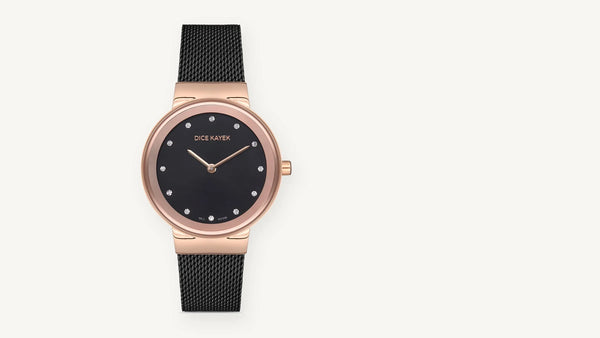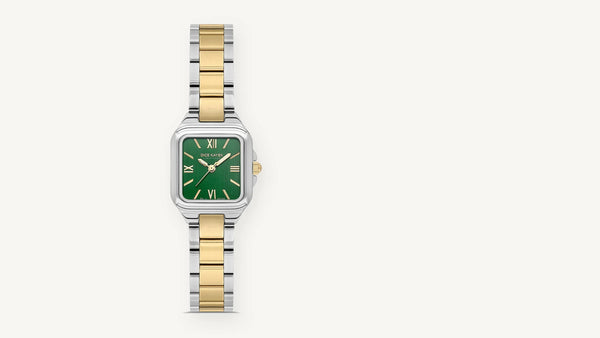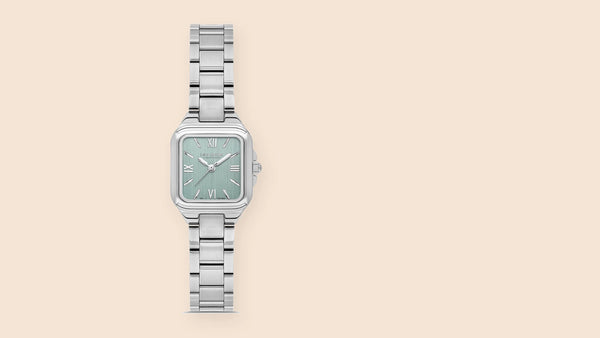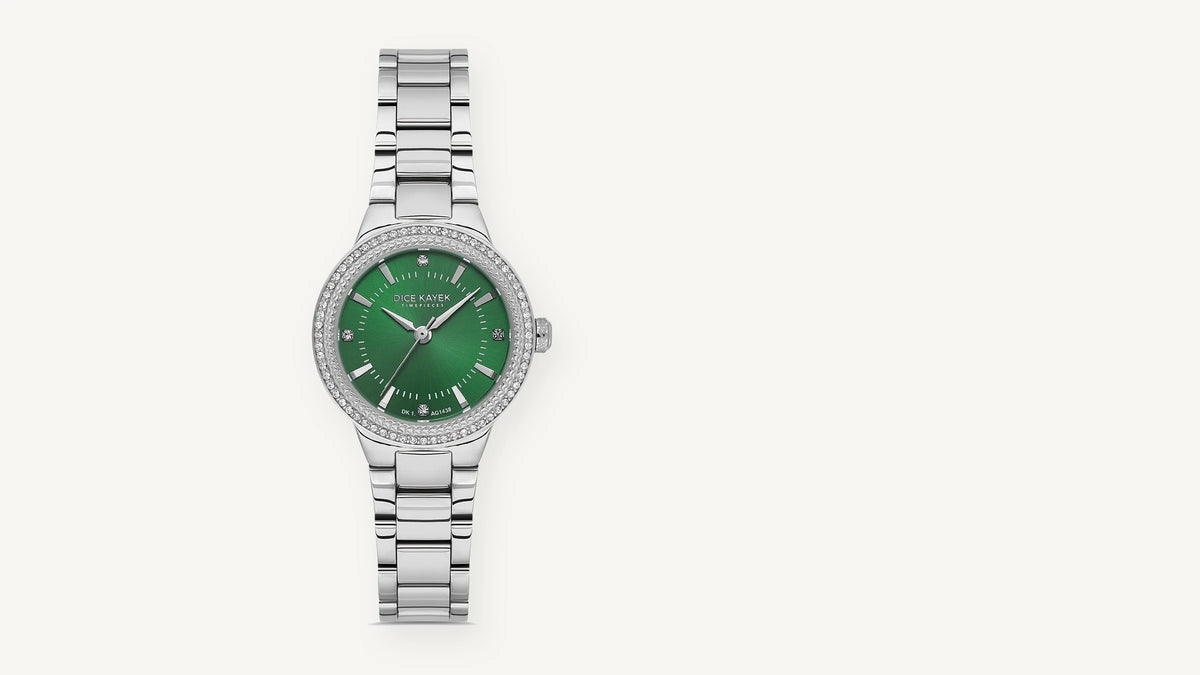
Short answer: Watches with stones are wristwatches whose bezel, indices, dial or case are decorated with small sparkling stones. Models differ in three ways: the stone type (cubic zirconia, crystal glass or real diamond), the stone position (bezel, indices, dial, case) and the stone density (partial or full stone-set). For everyday wear, a single-row bezel or stone indices work best; for evenings, a double-row bezel or a stone-set dial. Clean the stones with a dry, soft cloth and brush, and avoid chemicals and ultrasonic cleaners.
What the stone is, how it is set and where it sits decide both how a watch with stones looks and how it ages over the years. This guide separates watches with stones by these criteria. Which style a stone-set watch suits is covered in our women's watch style guide.
Contents
- What is a watch with stones, and how do models differ?
- Which stones are used in watches with stones?
- What is a crystal watch? Crystal stones versus watch crystal
- Stone placement: bezel, indices, dial and case
- How are stones held, and can they fall out?
- Full or partial stones: which should you choose?
- What to look for when choosing between watches with stones
- How to clean and protect a watch with stones
- Frequently asked questions
What is a watch with stones, and how do models differ?
A watch with stones is a wristwatch with decorative stones on its case, bezel, dial or bracelet. The stones play no part in timekeeping; they are ornaments that refract light to create sparkle. The three criteria that separate models are stone type, position and density, and most of the difference in price and durability comes from them.
Product specifications usually show stones with a line such as "Function: Stone". It tells you the watch has stone details but does not always state the type; if the type is not written, do not assume a precious stone. Dice Kayek Timepieces specifications also mark stone-set models with the "Stone" function, and they are listed on the stone-set women's watches page. These models also have a quartz movement, a solid stainless steel case and hardened mineral glass.
Which stones are used in watches with stones?
Watches most often use cubic zirconia, crystal (cut glass stones) and, at the higher end, real diamond. Cubic zirconia is a synthetic stone made in a laboratory; crystal is glass with increased light refraction; diamond is the hardest and most expensive option. Two watches with the same sparkle can sit at very different prices because of the stone type.
| Stone type | What is it? | Hardness (Mohs) | What to watch for |
|---|---|---|---|
| Cubic zirconia | Synthetic stone made by melting ingredients in a laboratory; a diamond simulant | 8.5 | Colourless stones may yellow slightly over time; more brittle than diamond |
| Crystal (cut glass stone) | Glass with additives such as lead oxide to increase refraction | Similar to glass, softer than cubic zirconia | Its surface dulls more easily with knocks and friction |
| Natural zircon | A naturally formed mineral; not the same as cubic zirconia | 6–7.5 | Ultrasonic and steam cleaning are not recommended |
| Diamond | Natural or lab-grown carbon crystal | 10 | A precious stone; stone details are usually supplied with a document |
In Turkish, "zirkon taş" (zircon stone) mostly means synthetic cubic zirconia; in gemmology, zircon is a softer natural mineral. If a description says "zircon", ask which one is meant to avoid false expectations.
What is a crystal watch? Crystal stones versus watch crystal
"Crystal watch" has two meanings. In fashion, a crystal watch is decorated with crystal glass stones on the dial or bezel. In watchmaking, "crystal" is the name of the glass that protects the dial, so "crystal glass watch" may describe the watch's glass rather than a watch with stones.
Crystal in the stone sense is glass with added lead oxide that increases its weight and refractive power; Britannica describes it as lead crystal, or flint glass. Crystal in the watch-glass sense is usually mineral glass or sapphire: according to Citizen, mineral crystal is tempered silica glass preferred for everyday watches, and sapphire ranks 9 on the Mohs scale. Dice Kayek Timepieces models use hardened mineral glass.
Stone placement: bezel, indices, dial and case
Stone placement describes which part of the watch the stones sit on, and it shapes both look and durability. Stones on the dial and indices sit under the glass and are protected. Stones on the bezel and case sides catch the most light but are also the most exposed to friction and knocks.
| Placement | Look | Everyday wear | Caution |
|---|---|---|---|
| Stone indices | Small stones in place of hour markers; restrained sparkle | Very suitable | The most protected placement, as the stones sit under the glass |
| Single-row bezel | A thin ring of light around the dial | Suitable | Avoid rubbing against hard edges such as desks and door handles |
| Double-row bezel | Pronounced, strong jewellery effect | Occasional wear | The outer row is more exposed to knocks |
| Stone-set dial (full pavé) | All or most of the dial is covered in stones | Evenings and special days | Legibility may drop; check the contrast of the hands against the dial |
| Case sides and lugs | Sparkle seen from the side; bracelet effect | Occasional wear | The area that touches surfaces most as the arm moves |
In the Lumina collection, where Dice Kayek Timepieces' stone-set models stand out, you will find single- and double-row stone bezels, stone indices and stone details on the case edge. A selection of oval models with stone-set bezels:
How are stones held, and can they fall out?
Stones are held by small metal prongs, by channels between metal walls or by a close pavé layout. A correctly set stone does not come loose in normal use; a hard knock, constant friction or a prong opening over time can loosen it. That is why lost stones are seen most often on the outer bezel.
GIA recommends checking pavé stones and prongs occasionally and warns that loose stones can be dislodged in an ultrasonic cleaner. If you notice a moving stone, stop wearing the watch. Dice Kayek Timepieces watches carry a 2-year warranty against manufacturing defects; drops, impacts and normal wear are not covered. If a stone comes out, keep it and follow the warranty and service steps.
Full or partial stones: which should you choose?
A partial stone-set watch has stones in one area only, usually the bezel or indices; a full stone-set watch has stones on the bezel, dial and case or bracelet together. If you will wear the watch most days, a partial model is more sensible; for evenings and special days only, a full stone-set model makes sense.
| Criterion | Partial stones | Full stones |
|---|---|---|
| Stone position | Bezel or indices | Bezel, dial, case and/or bracelet |
| Effect | Elegant, restrained sparkle | Strong jewellery effect |
| How often worn | Most days of the week | Evenings, ceremonies and special days |
| With jewellery | Easy to pair with a fine necklace and earrings | Keep other jewellery simple |
| Care | Fewer contact surfaces, easy cleaning | More stones, more frequent checks |
For ceremony watches, see our engagement watch and bridal watch guides.
What to look for when choosing between watches with stones
When choosing between watches with stones, consider how often you will wear it first, then the stone position, metal tone, dial colour and case size. Sparkle alone is not a criterion; a balanced fit on the wrist and neatly set stones matter more.
- Decide how often you will wear it: stone indices or a single-row bezel for every day, a double-row bezel or stone-set dial for evenings.
- Match the metal tone to your jewellery: silver tone pairs with white gold and silver, yellow or rose plating with jewellery in the same tone.
- Judge the dial colour with the stones: black, green and blue dials make the stones stand out through contrast; silver and white dials look softer.
- Try the case size on your wrist: a stone-set bezel can make a case look larger; for sizing, see our guide to choosing a women's watch.
- Inspect the stones under light: bezel stones should be aligned and evenly spaced.
- Check the water resistance: stone-set models are mostly rated 3 ATM, which covers hand washing and splashes.
If you prefer a silver tone, the silver women's watches also include stone-set models. A selection of models with stone-set bezels:
How to clean and protect a watch with stones
Wipe a watch with stones with a dry, lint-free soft cloth and clean between the stones with a soft, dry brush. What dulls the sparkle most is a build-up of sweat, cream and perfume. Alcohol, acetone and abrasives harm the plating and gaskets, and an ultrasonic cleaner can dislodge loose stones.
- Take the watch off; wipe the case, bezel and bracelet with a dry, soft cloth.
- Gently brush between the stones and bracelet links with a soft, dry toothbrush.
- If needed, dampen the cloth very slightly; do not submerge the watch, then dry it.
- Apply perfume and cream before putting the watch on; store it in its box, away from other jewellery.
For plating, water and battery rules, see our watch care guide.
Lumina collection
Choose your sparkle by how often you wear it
The water resistance and case diameter of each stone-set Dice Kayek model are listed in the technical specifications table on the product page. Shipping within Türkiye is free, and you can return your watch within 30 days of delivery.
Explore Lumina models →Frequently asked questions
What is a watch with stones?
A watch with stones is a wristwatch whose bezel, indices, dial, case or bracelet is decorated with decorative stones. The stones play no part in timekeeping; models differ by stone type, position and density.
Is a watch with stones suitable for everyday wear?
Models with restrained stones on the indices or bezel suit everyday wear; stone-set dials and full stone-set models suit evenings and special days better. Style advice is in our women's watch models style guide.
What is the difference between a crystal watch and a zircon stone watch?
A crystal stone is cut glass with increased refraction. A zircon stone usually means synthetic cubic zirconia, which has a Mohs hardness of 8.5 and is harder than glass, so it dulls more slowly. Neither is a precious stone.
Can the stones fall out of a watch with stones?
Correctly set stones do not fall out in normal use. A hard knock, constant friction or an opened prong can loosen a stone; the riskiest area is the outer bezel. If a stone moves, have the watch checked.
How do you clean a watch with stones?
Wipe the watch with a dry, soft cloth and clean between the stones with a soft, dry brush. Do not submerge the watch, and do not use alcohol, acetone or an ultrasonic cleaner.
What outfits go with a watch with stones?
Single-row bezel or stone-index models work every day with shirts, knitwear and simple dresses. Double-row bezels and stone-set dials look better with evening gowns and cocktail dresses.
Should you choose a full or partial stone-set watch?
If you will wear the watch most days, a partial stone-set model is more suitable; for evenings and special days only, a full stone-set model. Partial stone-set models are also easier to care for.
Does a watch with stones tarnish?
The stones do not tarnish, but a layer of sweat, cream and perfume makes them look dull; regular dry cleaning removes it. Gold and rose plating can wear over time; keep it away from cosmetics.
Can you wear a bracelet with a watch with stones?
Yes, in moderation. A single thin, simple bracelet in the same metal tone sits well; thick or stone-set bracelets compete with the watch and can scratch the stones as they rub.
Which dial colour looks best on a women's watch with stones?
It is a matter of taste: black, green and blue dials make the stones stand out through contrast, while silver and white dials stay in the same tone as the stones for a softer, classic look.
About this article
Prepared by: Dice Kayek Timepieces · Last updated: 16 November 2026
The technical information in this guide is based on Dice Kayek Timepieces product specifications and on manufacturers' published user manuals. For exact values, see the technical specifications table on each product page; prices and stock are read live.
Sources: GIA — What Are Simulated Diamonds? · GIA — Diamond Alternatives · GIA — Ring Settings · Britannica — Flint glass · Citizen — Mineral vs sapphire crystal