Short answer: A watch is cleaned by wiping it with a dry or slightly damp soft microfibre cloth. The gaps between bracelet links or mesh are brushed with a soft toothbrush dipped in lukewarm water with a little soap, while the case is wrapped in cling film to keep water out, and the watch is then dried completely. A 3 ATM watch should not be rinsed under the tap or submerged. Toothpaste, bleach, alcohol and ultrasonic cleaners are not used, as they can damage plating, stones and gaskets.
Because a watch touches the skin every day, sweat, dust, perfume and cream residue build up mostly between bracelet links, along the edges of the case and around the crown. This guide covers the case, glass, bracelet and stone-set surfaces in a single routine and limits every step to the watch's water resistance rating.
Contents
- How to clean a watch: a safe step-by-step method
- What should you clean the case, glass and bracelet with?
- How do you clean a tarnished watch?
- How do you clean a stone-set or plated watch?
- What should you avoid when cleaning a watch?
- How do you clean stainless steel jewellery?
- How often should you clean a watch?
- Frequently asked questions
How to clean a watch: a safe step-by-step method
The safe answer to how to clean a watch is a routine that keeps water away from the case: dust is removed first with a dry cloth, then only the bracelet is cleaned with a damp brush, and finally the whole watch is dried. This method is safe for both 3 ATM and 5 ATM watches, because it removes the risk of water entering the case from the start.
- Preparation: Make sure the crown is fully pushed in. Wash and dry your hands.
- Dusting: Wipe the case, glass and bracelet with a dry, clean microfibre cloth. Blow dust off the glass first; a grain of dust rubbed with a cloth can leave a mark.
- Protecting the case: If you will clean the bracelet with water, wrap the watch case in cling film.
- Brushing the bracelet: Dip a soft toothbrush in lukewarm water with a few drops of liquid soap and gently brush between the links or the mesh.
- Rinsing: Remove the soap by wiping with a damp cloth; do not hold the case under running water.
- Drying: Press a towel between the links to dry them, leave the watch in a ventilated spot and make sure no moisture remains.
Citizen's care guide states that a watch needs a water resistance of at least 5 bar for its case to be cleaned with running water. Most Dice Kayek models are 3 ATM and some are 5 ATM; the exact rating of your watch is listed in the technical specifications table on its product page. Even on a 5 ATM watch, hot water and soaking in soapy water are not recommended. For everyday care habits, see our watch care guide.
What should you clean the case, glass and bracelet with?
Each part of a watch is made of a different material, and one method does not suit every part. A stainless steel case and bracelet can take a slightly damp brush; mineral glass is only wiped with a soft cloth; plated and stone-set surfaces are cleaned with a dry, lint-free cloth. The table below sums up what to use and what to avoid, part by part.
| Part | What to use | What to avoid |
|---|---|---|
| Stainless steel case | Dry or slightly damp microfibre cloth | Running water (3 ATM), metal polish |
| Mineral glass | Clean, soft microfibre cloth | Paper towels, toothpaste, glass-cleaning powder |
| Steel link bracelet | Lukewarm water with a little soap, soft toothbrush (case protected) | Wire brush, bleach |
| Mesh bracelet | Dry soft brush; if needed a damp brush and thorough drying | Leaving moisture in the weave |
| Stone-set case or dial surround | Dry, lint-free cloth; dry soft brush | Sonic devices, jewellery cleaners with ammonia or alcohol |
| Gold and rose plating | Dry, soft cloth | Abrasive sponges, scouring cream, perfume and cologne |
| Leather strap | Dry soft cloth, drying in a ventilated spot | Water, detergent, alcohol-based products |
Cleaning and protecting the glass is covered in our mineral glass guide, and care by strap type in our watch strap types article.
How do you clean a tarnished watch?
The dark or yellowish marks people call "tarnish" on a watch are usually not rust but sweat, dust and cosmetic residue built up between the links. This build-up is removed with a soft toothbrush dipped in lukewarm soapy water while the case is protected. Brown spots that remain after brushing may be real rust and need a service.
Seiko's and Citizen's care guides give the same warning: even on a stainless steel bracelet, rust can form if sweat and dirt stay between the links for a long time, and that rust can leave yellow stains on a shirt cuff. Rubbing a lasting stain with vinegar, lemon or baking soda is not recommended; acidic or abrasive substances dull the finish. If you notice rust or looseness in the bracelet pins, stop wearing the watch and contact our service team.
The easiest way to prevent stains is to adjust the bracelet so that one finger fits between it and your wrist; Seiko recommends this gap both for comfort and to keep sweat from building up on the bracelet. Wiping the bracelet with a dry cloth at the end of a warm day stops the build-up before it starts.
How do you clean a stone-set or plated watch?
Stone-set and gold-tone plated watches are cleaned by wiping them with a dry, lint-free cloth in gentle circular motions. Dust around the stones is removed with a dry, soft brush. Swarovski's watch care guide states that sonic cleaners and jewellery cleaners containing ammonia or alcohol can damage both the plating and the stones.
Perfume, hairspray and lotion wear plating down fastest, so put your watch on after applying cosmetics. How plating is made and how long it lasts is explained in our gold watch models guide. Wear of the plating is a result of normal use and is not covered by the warranty, so staying away from any abrasive method is the safest choice.
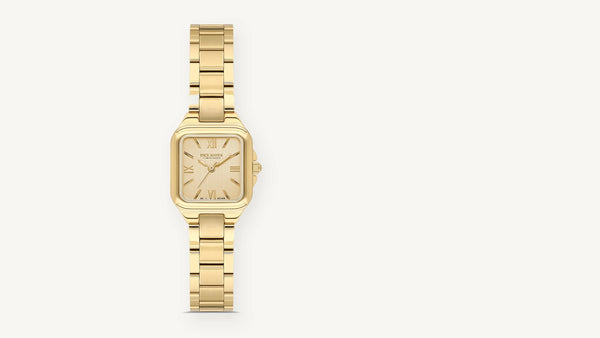
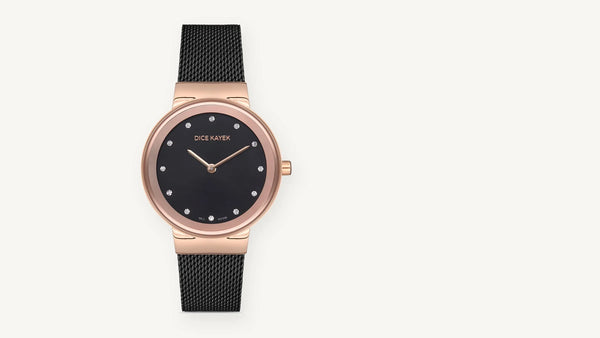
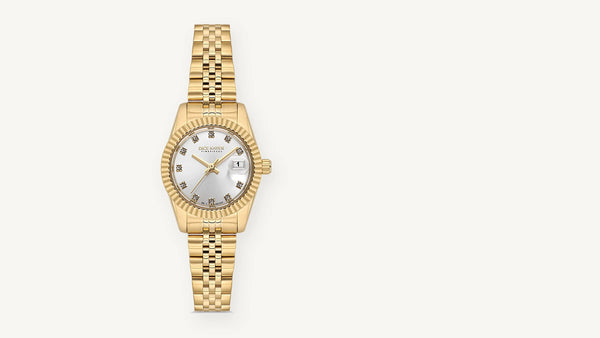
Stone-set models that are easy to polish with a dry cloth:
See every model in the crystal-set women's watches collection; gold-tone models are gathered in the Solène collection.
What should you avoid when cleaning a watch?
When cleaning a watch, avoid abrasives, harsh chemicals, hot water and vibrating devices. Each of these can leave damage that lasts longer than the dirt: the glass turns dull, the plating thins and the gaskets age. The table below shows methods often suggested online and their risks.
| Method | Risk | Instead |
|---|---|---|
| Toothpaste | Abrasive particles can dull the glass and scratch plating | Microfibre cloth |
| Bleach, ammonia | Discoloured plating, worn gaskets | A few drops of liquid soap |
| Alcohol, cologne, acetone | Fading on plating and leather straps | Slightly damp cloth |
| Ultrasonic (sonic) cleaner | Damage to stones and plating; the case is submerged | Dry soft brush |
| Vinegar, lemon, baking soda | Acidic or abrasive effect, dulling | Lukewarm soapy water, case protected |
| Hot water, steam | Stress on gaskets, condensation | Lukewarm water, on the bracelet only |
You do not need to buy a separate watch cleaning kit. A spectacle-grade microfibre cloth, a soft toothbrush and liquid soap are enough for everyday care. If you do buy a kit, check that its liquid contains no alcohol or ammonia. Why scratches on the glass should not be treated with toothpaste is explained in detail in our guide to removing scratches from watch glass.
How do you clean stainless steel jewellery?
Stainless steel jewellery is cleaned the same way as a watch bracelet: lukewarm water with a few drops of liquid soap, a soft toothbrush and then thorough drying. Because jewellery has no movement to protect, it can be soaked briefly in lukewarm water; stone-set or plated pieces, however, are only wiped with a dry cloth.
If you wear a steel bracelet and a watch on the same wrist, cleaning them together reduces the sweat and rub marks that build up between them. Jewellery rubbing against a watch can scratch the case and plating; store them in separate compartments.
How often should you clean a watch?
A watch should be wiped with a dry cloth after every wear, cleaned with a slightly damp cloth after a sweaty day or contact with sea or pool water, and have its bracelet gaps brushed once a month. Frequent cleaning is the easiest way to prevent lasting stains and rust on the bracelet. A watch that will not be worn for a long time should be cleaned, dried and stored in a ventilated spot.
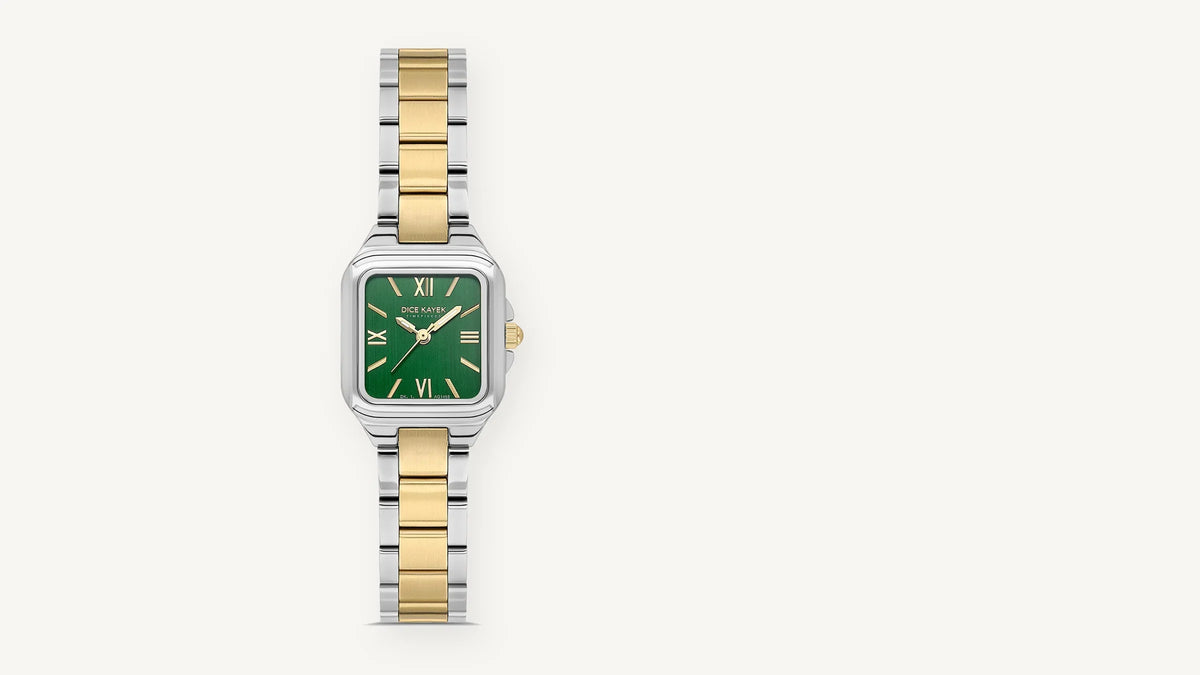
Easy-to-clean models with solid stainless steel bracelets and 5 ATM water resistance:
Solid stainless steel
Choose a steel watch that is easy to care for
In Dice Kayek models, the case and bracelet are solid stainless steel and the glass is hardened mineral glass; shipping within Türkiye is free.
Explore steel bracelet watches →Frequently asked questions
How do you clean a watch?
A watch is cleaned by wiping it with a dry or slightly damp soft microfibre cloth. The bracelet gaps are brushed with a soft toothbrush dipped in lukewarm soapy water while the case is wrapped in cling film, and the watch is then dried completely. A 3 ATM watch is not submerged.
How do you clean a stainless steel watch?
The case of a steel watch is wiped with a microfibre cloth; the gaps between the links of a steel bracelet are cleaned with lukewarm soapy water and a soft toothbrush while the case is kept dry. The links are then dried by pressing a towel between them. Metal polish and bleach are not used.
How do you clean a tarnished watch?
What looks like tarnish on a watch is usually sweat and cosmetic residue built up between the links. It is cleaned with lukewarm soapy water and a soft toothbrush while the case is protected. Brown spots that remain after brushing may be rust; in that case the watch should be taken for service.
Can you use toothpaste to clean a watch?
Toothpaste is not recommended. Its abrasive particles can dull mineral glass and scratch polished steel and plating. A soft microfibre cloth and, if needed, lukewarm water with a few drops of liquid soap are enough for a watch.
How do you clean a stone-set watch?
A stone-set watch is wiped with a dry, lint-free cloth in gentle circular motions; dust around the stones is removed with a dry, soft brush. Sonic cleaners and jewellery cleaners containing ammonia or alcohol are not used, as they can damage the stones and plating.
Can a gold-plated watch be washed with soapy water?
Soaking or scrubbing a gold-plated watch in soapy water is not recommended. Everyday cleaning is done with a dry, soft cloth; heavy dirt is wiped with a slightly damp cloth and dried immediately. Wear of the plating is not covered by the warranty, so abrasive products should be avoided.
Do you need a watch cleaning cloth and solution?
A dedicated watch cleaning kit is not essential. A clean microfibre cloth, a soft toothbrush and a few drops of liquid soap are enough for everyday care. If you use a ready-made cleaning solution, check that it contains no alcohol or ammonia.
How do you clean a mesh strap?
The weave of a steel mesh strap is first cleaned with a dry, soft brush. For heavy dirt, the case is wrapped in cling film, the strap is brushed with a brush dampened in lukewarm soapy water and then dried by pressing a towel against it. No moisture should be left in the weave.
Is it harmful to clean a watch in an ultrasonic cleaner?
Yes, it is not recommended for a watch. An ultrasonic cleaner submerges the watch, which exceeds the limit of a 3 ATM watch. Swarovski's care guide also states that sonic cleaners can damage plating and stones. A soft brush is enough to clean the bracelet.
How often should you clean a watch?
A watch should be wiped with a dry cloth after every wear, cleaned with a slightly damp cloth after a sweaty day or contact with sea or pool water, and have its bracelet gaps brushed once a month. Regular cleaning prevents lasting stains and rust.
How do you remove darkening from a watch?
Darkening on a steel watch is mostly dirt and sweat built up between the links; it is cleaned with lukewarm soapy water and a soft brush while the case is protected. If darkening on a plated watch comes from worn plating, cleaning will not remove it and it should not be polished at home.
How do you clean a watch that has water inside?
A watch with condensation or water droplets under the glass should not be cleaned or opened at home. Stop wearing it and contact a service centre. Exposure to water beyond the water resistance rating is not covered by the warranty.
Related guides: Stainless Steel Watch
About this article
Prepared by: Dice Kayek Timepieces · Last updated: 16 November 2026
The technical information in this guide is based on Dice Kayek Timepieces product specifications and on manufacturers' published user manuals. For exact values, see the technical specifications table on each product page; prices and stock are read live.
Sources: Citizen — Cleaning your wristwatch · Seiko — How should I care for my watch band? · Swarovski — How to care for watches