Short answer: A watch usually runs slow because of a battery nearing the end of its life, a strong magnet, extreme heat or cold, a hard knock or a crown left in the setting position. If a digital watch is running slow, the causes are similar, because it also runs on a quartz crystal. A standard quartz watch deviates by only a few seconds a month; losing minutes is a sign of a problem. Check the crown and the surroundings first, and if the problem continues, have the battery and movement checked at a service centre.
Contents
- When is a slow watch a problem?
- Why does a watch run slow? 7 possible causes
- Why does a digital watch run slow?
- Why does a watch run fast or stop?
- What to do, step by step, if your watch runs slow
- How can you stop a watch from running slow?
- When should a slow watch go for service?
- Frequently asked questions
When is a slow watch a problem?
A quartz watch running slow becomes a problem when the deviation grows from a few seconds a month to minutes. Seiko's user manual states that analogue quartz watches lose or gain less than 15 seconds a month (20 seconds for some calibres) at normal temperatures of 5–35 °C. Losing a minute or more a week is a symptom worth measuring.
We explain how a quartz movement works and why it is so accurate in our guide to quartz watches. This article covers only why a watch runs slow, runs fast or stops, and what to do in each case.
Measure before you diagnose: set the watch to the same second as your phone and note the difference after 3–7 days. A small, steady difference means the watch is working normally; a large difference, or days when the watch does not move at all, points to one of the causes below.
Why does a watch run slow? 7 possible causes
The most common reasons a watch runs slow are a battery nearing the end of its life, a strong magnet nearby, extreme heat or cold, a hard knock, a crown left in the setting position, moisture inside the case and a movement fault. Some of these correct themselves once the watch returns to normal conditions; others need a service centre.
| Cause | Typical sign | What to do |
|---|---|---|
| Battery nearing its end | The second hand jumps every 2 seconds or the watch stops now and then | Have the battery replaced by an authorised service centre |
| Magnetic field | The watch runs slow or stops after sitting near a magnet | Move it away from the magnet and reset the time |
| Extreme heat or cold | Slight deviation after a sauna, hot water or freezing cold | Watch it for a few days at room temperature |
| Hard knock | Deviation after a drop, hands that catch or stop | Contact a service centre; do not open it yourself |
| Crown in the setting position | The second hand does not move at all | Push the crown all the way in |
| Moisture or water inside | Fog under the crystal, irregular running | Stop wearing it and send it for service straight away |
| Movement fault | Minutes of deviation despite a new battery | Start the warranty and service process |
According to Seiko's manual, the effect of a magnetic field disappears once the watch is moved away from the magnet, and the slight deviation caused by hot water or cold below –10 °C corrects itself at normal temperature. A knock or moisture, however, can leave lasting damage.
Why does a digital watch run slow?
If a digital watch runs slow, the cause is usually the battery, temperature or the electronic circuit, because a digital watch also measures time with a quartz crystal. The difference from an analogue watch is that it has no hands and no stepping motor. Seiko notes that digital quartz watches are generally not affected by magnetism because they contain no motor. Casio writes that extreme temperatures can make a watch lose or gain time, or stop.
The digital clocks on phones, computers and ovens are a different case: these devices usually synchronise time from the internet or the mains. If your phone clock runs slow, first check that automatic date and time is switched on in the settings. Dice Kayek does not sell digital watches; the advice in this guide is written for women's quartz watches with hands.
Why does a watch run fast or stop?
If a quartz watch runs fast, the most likely causes are a magnetic field and extreme temperature; Casio notes that strong magnetism can slow down, speed up or stop the hands. The most common reason a watch stops completely is a flat battery. A crown left in the setting position also stops the watch.
Running slow and stopping are often confused: a watch that stops for a while and then starts again looks as if it has "lost minutes". We have gathered the signs of a dying battery and typical battery life in how long a watch battery lasts, so we do not repeat them here.
The rule for the crown is simple: as the Grand Seiko manual explains, the seconds hand stops on the spot when the crown is pulled out to the setting position, and the watch starts immediately when the crown is pushed back in. Forgetting to push the crown fully home after setting the time is the easiest "my watch stopped" problem to solve.
What to do, step by step, if your watch runs slow
If your watch runs slow, first check the crown and the surroundings, then measure for a few days; if the problem continues, consider the battery and a service. The order below starts with the simplest free checks and moves towards the service centre.
- Check the crown. It should be pushed all the way in; if not, push it in and reset the time.
- Move it away from magnets. Keep it at least 5 cm from phones, tablet covers, magnetic bag clasps and speakers (Seiko's advice), then reset the time.
- Let the temperature return to normal. If the watch was in hot water, a sauna or the cold, observe it for a few days at room temperature.
- Measure. Set it to the same second as a reference clock and note the difference after 3–7 days.
- Look at the second hand. If it jumps every 2 seconds or the watch stops now and then, the battery needs replacing.
- Check under the crystal. If you see fog or a drop of water, stop wearing the watch.
- Do not open it yourself; contact a service centre. Opening the case back can damage the gasket and water resistance; follow our warranty and service process.
If the watch still loses minutes after a battery change, the problem is in the movement; send it for service instead of changing the battery a second time.
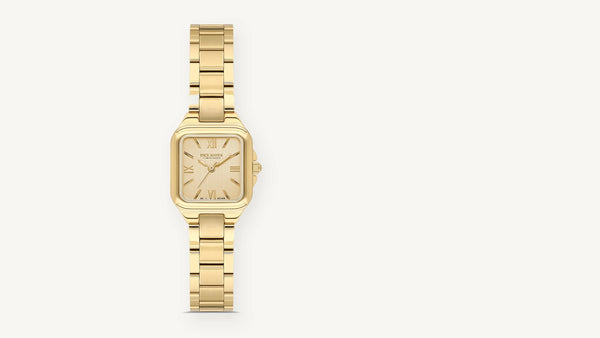
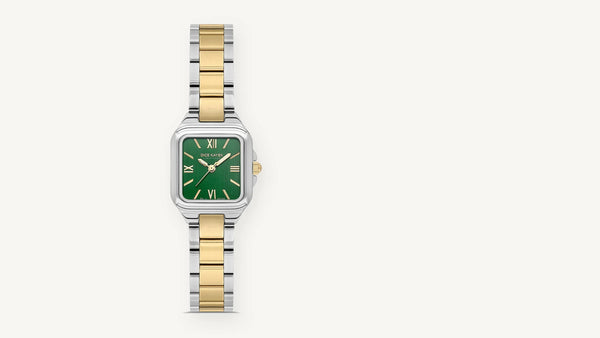
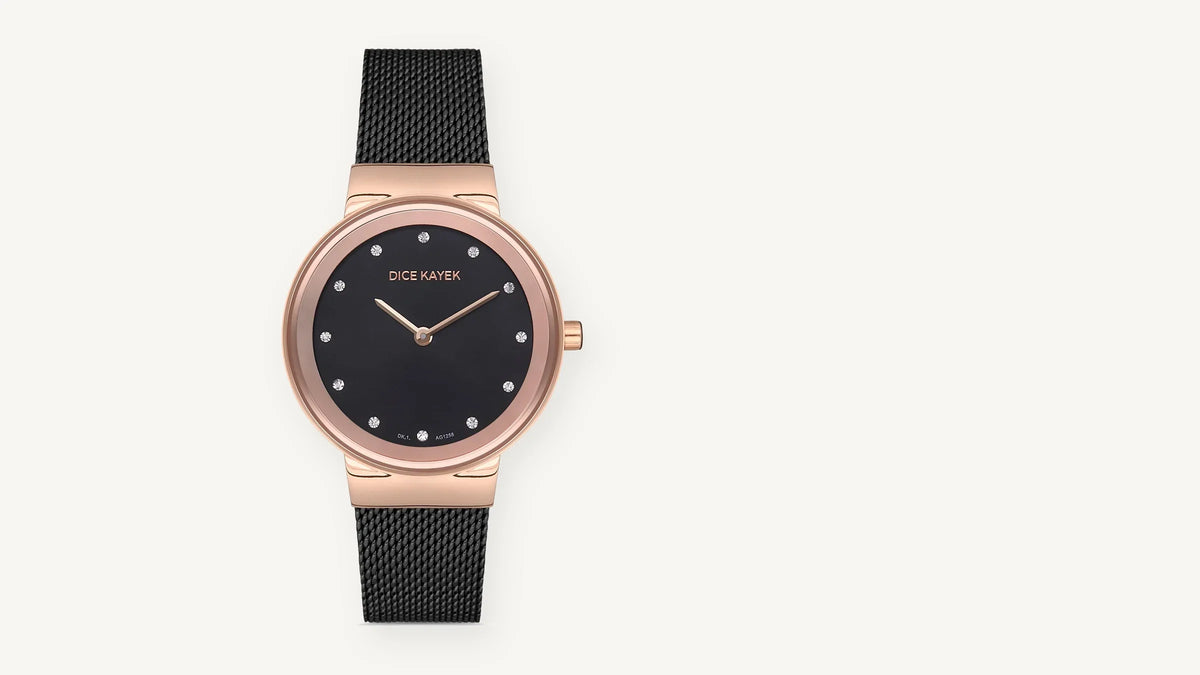
Simple three-hand models with easy-to-read dials that keep accurate time for years:
How can you stop a watch from running slow?
The way to stop a quartz watch from running slow is to protect it from magnets, extreme heat and knocks, push the crown in after every adjustment and replace a flat battery without delay. Seiko recommends having the case, crown, gasket and crystal checked every 2–3 years.
- Do not leave the watch on top of a phone, tablet cover or magnetic bag flap.
- Take the watch off before a sauna, hammam or hot shower; Seiko notes that temperatures above 60 °C can cause battery leakage.
- Do not wear the watch for sport, housework or moving furniture, when knocks are likely.
- Do not leave a flat battery inside the watch; when to replace a battery is a separate topic, but delay can damage the movement.
- Wipe the strap and case regularly with a soft, dry cloth to protect them from sweat and moisture; for care by strap type, see our guide to watch strap types.
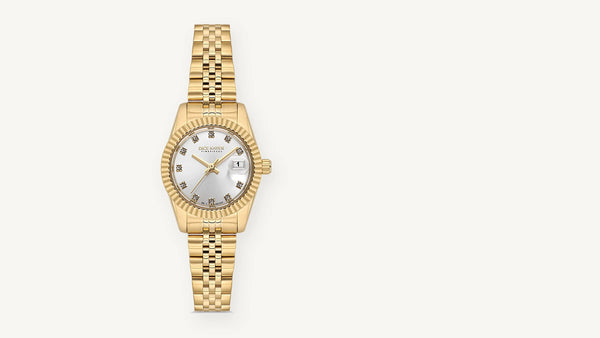
Models with a 5 ATM water resistance rating for days with more frequent water contact:
When should a slow watch go for service?
A slow watch should go for service if it still deviates after a battery change, has taken a knock, shows fog under the crystal or has hands that catch. Dice Kayek Timepieces watches carry a 2-year warranty against manufacturing defects; battery replacement and damage from drops or knocks are not covered.
Before you apply, have your order number, the watch model and a short description of the problem ready; if you measured the deviation, note how many seconds or minutes it lost over how many days. This makes it easier to tell whether the problem lies in the battery or the movement. The process and coverage are explained on the warranty and service page.
If a watch you have just received deviates noticeably from the first days, you can also use your returns and exchanges right within 30 days of delivery.
Women's watches
Quartz models that keep accurate time
Every Dice Kayek women's watch comes with a quartz movement, a stainless steel case and hardened mineral glass, and carries a 2-year warranty against manufacturing defects.
Explore women's watches →Frequently asked questions
Why does a watch run slow?
A watch can run slow because its battery is nearing the end of its life, it has been near a strong magnet, it has been exposed to extreme heat or cold, it has taken a hard knock, its crown was left in the setting position, moisture has entered the case or the movement is faulty. Deviation caused by magnetism or temperature usually corrects itself in normal conditions; a knock or moisture may need a service.
Why is my quartz watch running slow?
A quartz watch measures time with a quartz crystal, so it normally deviates by only a few seconds a month. When a quartz watch loses minutes, the most common causes are a weakening battery, a magnetic field, extreme temperature and a knock. If the battery is new and the deviation continues, the movement should be checked by a service centre.
What should I do if my digital watch is running slow?
Have the battery checked first, keep the watch away from extreme heat or cold and measure the deviation for a few days. Digital quartz watches contain no motor, so they are generally not affected by magnets. If a phone or computer clock runs slow, check that automatic date and time is switched on.
When the battery dies, does a watch run slow or stop?
When the battery runs out, a quartz watch stops. Many analogue quartz watches warn you first by moving the second hand in 2-second steps; according to Seiko, the watch keeps accurate time during this warning. On models without a warning function, the first sign may simply be the watch stopping.
Why does a watch keep good time for a while and then start running slow?
A watch that keeps good time and then runs slow often stops now and then: the battery may be nearing its end, the watch may have been left near a magnet or kept in the cold. Observe it for a few days in normal conditions; if the problem continues, have the battery and movement checked at a service centre.
Why does a watch run fast?
A quartz watch running fast is rarer than one running slow. The most likely causes are a strong magnetic field and extreme temperature; Casio notes that magnetism can also speed up the hands. If the watch still runs fast after returning to normal conditions and being reset, contact a service centre.
Can a magnet make a watch run slow?
Yes. The tiny stepping motor in an analogue quartz watch can be affected by a strong magnetic field, making the watch run slow or stop. Seiko recommends keeping the watch more than 5 cm from magnetic products and then resetting the time. A watch exposed to a very strong field is corrected by demagnetisation at a service centre.
Can a watch run slow after a knock?
It can. A hard drop or impact can affect the hands, gears or electronic circuit and make the watch run slow or stop. Do not open the watch yourself after a knock; contact a service centre. Damage from drops and knocks is not covered by the Dice Kayek warranty.
How many seconds a month is normal for a quartz watch?
According to Seiko's manual, analogue quartz watches deviate by less than 15 seconds a month (20 seconds for some calibres) at normal temperatures between 5 and 35 °C. The exact figure varies by model. Deviation of more than a minute a week is not normal and should be checked.
Will a new battery fix a watch that runs slow?
It will if the battery is the cause. If the second hand jumps every 2 seconds or the watch stops now and then, a battery change usually solves the problem. If the watch still loses minutes with a new battery, the problem is in the movement; send it for service instead of changing the battery again.
Can hot or cold weather make a watch run slow?
Slightly. Seiko states that analogue quartz watches run with stable accuracy between 5 and 35 °C, that hot water or cold below –10 °C can cause a slight loss or gain, and that this corrects itself once the watch returns to normal temperature. Temperatures above 60 °C can cause battery leakage.
Related guides: How to Set a Wristwatch
About this article
Prepared by: Dice Kayek Timepieces · Last updated: 16 November 2026
The technical information in this guide is based on Dice Kayek Timepieces product specifications and on manufacturers' published user manuals. For exact values, see the technical specifications table on each product page; prices and stock are read live.
Sources: Seiko — Cal. 6G28 kullanım kılavuzu · Seiko — How does magnetism affect a watch? · Grand Seiko — How to set the time (Cal. 9F) · Casio — Operating Precautions (Module 5553)