Short answer: How to remove scratches from watch glass depends on the crystal type. Scratches on acrylic (plexi) crystal can be polished out at home with a polishing paste. On hardened mineral glass, only very fine marks can be softened with special diamond pastes; a deep scratch means replacing the crystal. Sapphire rarely scratches; if it scratches or cracks, it is replaced.
The method recommended most often online is toothpaste, but it does not work on the mineral glass used on most watches and it can damage the case. This guide first shows how to identify your crystal, then the right method for each type, how to treat scratches on the case and when to decide on a crystal replacement.
The 30-second summary
- Acrylic crystal: most scratches come out at home with a polishing paste and a soft cloth.
- Mineral glass: fine marks may fade with diamond paste; a scratch that catches a fingernail means a new crystal.
- Sapphire crystal: rarely scratches in everyday wear; damage means replacement.
- Toothpaste and sandpaper: do nothing for mineral or sapphire; sandpaper can scratch the glass and both can dull the case.
- Crystal replacement is a service job; it needs a gasket check and a water resistance test.
How do you remove scratches from watch glass?
Short answer: Scratches on watch glass are removed either by polishing or by replacing the crystal, depending on its material. Acrylic is soft, so a polishing paste levels the surface. Mineral and sapphire crystals are far harder; home methods cannot abrade these surfaces, so a noticeable scratch calls for a replacement.
| Crystal type | Fixable at home? | Right method | When to see a service centre |
|---|---|---|---|
| Acrylic (plexi, hesalite) | Yes, most scratches | Acrylic crystal polishing paste + a soft cloth | If there is a crack or a very deep gouge |
| Hardened mineral glass | Only very fine marks | A diamond paste kit made for mineral/sapphire; not for coated crystals | A scratch that catches a fingernail, a crack, a chipped edge |
| Sapphire crystal | In practice, no | Scratches are rare; damage means a replacement | Any scratch or crack |
The reason for this split is hardness: acrylic is a plastic, so a polishing paste can level its surface; mineral glass is about 5.5 on the Mohs scale and sapphire is 9, and household materials cannot abrade these surfaces.
What type of crystal does your watch have?
Short answer: The most reliable way to identify a watch crystal is the product sheet, the warranty card or the brand’s service centre. If the sheet says “acrylic”, “hesalite” or “plexi”, the crystal is plastic; “mineral” or “hardened mineral glass” means hardened glass, and “sapphire” means a sapphire crystal.
Many affordable watches use acrylic, the mid-range mostly uses hardened mineral glass and the upper segment uses sapphire. Every Dice Kayek Timepieces watch has hardened mineral glass; how that glass is made and why it scratches is explained in our guide to what mineral glass is. If you are not sure of the crystal type, do not start any polishing attempt.
How do you remove scratches from an acrylic watch crystal?
Short answer: Scratches on an acrylic watch crystal are removed with a polishing paste made for acrylic and a soft cotton cloth. Apply the paste to the scratched area, rub it in with firm circular movements for a few minutes and repeat if necessary. Deep scratches may disappear after several rounds; if there is a crack, the crystal should be replaced.
- Clean the watch. Wipe the crystal with a dry microfibre cloth; grains of sand on the surface can cause new scratches.
- Protect the case. Cover the bezel and case edge with masking tape; the paste can mark metal surfaces.
- Apply the paste. Put a small amount of acrylic polishing paste, smaller than a pea, on the scratched area.
- Rub with pressure. Polish with a soft cloth in circular movements for 2–3 minutes with medium pressure.
- Wipe and check. Remove the residue with a clean cloth; if the scratch is still visible, repeat.
This method is only for plastic crystals. The same paste leaves no mark on mineral or sapphire glass; it only wastes time.
Can scratches on mineral glass be removed?
Short answer: Very fine, superficial marks on mineral glass can be softened with diamond-powder polishing kits made for mineral and sapphire crystals. However, these kits should not be used on crystals with an anti-reflective (AR) coating, and incorrect use can leave a wavy distortion in the glass. For a deep scratch that catches a fingernail, the most reliable solution is a crystal replacement.
Diamond paste kits work by removing a very thin layer from the glass surface, so working too long on one spot can thin the crystal and distort the view. On a valuable watch or one still under warranty, it is safer to ask an authorised service centre than to experiment. The scratch test is simple: run your fingernail across the scratch; if the nail catches, the scratch is too deep to polish out.
Is sapphire crystal scratch-proof?
Short answer: Sapphire crystal is not scratch-proof, but it is very hard to scratch. At 9 on the Mohs scale, sapphire can only be scratched by harder materials such as diamond; sand and dust leave no mark on it. Sapphire’s weak point is impact: a hard knock can chip its edge or crack it. In that case the crystal is replaced.
Because sapphire is difficult to cut and polish, replacing it costs more than replacing mineral glass. A fine mark on a sapphire crystal is sometimes in the anti-reflective coating on top rather than in the sapphire itself; coating wear cannot be polished away.
Can toothpaste remove scratches from watch glass?
Short answer: Toothpaste does not remove scratches from hardened mineral or sapphire crystals; its abrasives are not hard enough to abrade them. On acrylic it may give a temporary improvement, but if it gets onto the case and bezel it can dull polished steel. Home remedies such as sandpaper, baking soda and petroleum jelly do not work on mineral glass either.
Most home remedies do not remove the scratch; they only fill it so that it is less noticeable for a while, and it comes back after the first wipe. Sandpaper can permanently damage both the glass and the case. Apart from acrylic crystals, the right route is a product suited to the crystal type, or a service centre.
How do you remove scratches from a watch case?
Short answer: Fine scratches on a steel watch case are treated according to the surface finish. Polished (mirror) surfaces are refreshed with a metal polishing cloth or professional polishing, while brushed surfaces are restored by brushing in the same direction as the grain. The wrong method polishes a brushed surface or dulls a polished one. Plated cases should not be polished.
- Polished steel: a metal polishing cloth reduces superficial marks; deep marks need professional polishing.
- Brushed steel: the direction of the lines must be kept; rubbing the wrong way leaves shiny patches.
- Gold-tone or rose plating: polishing thins the plating layer and can expose the steel underneath. Plating types and care are covered in our gold watch models guide.
Small scratches on a steel bracelet follow the same logic; for bracelet types and care, see our watch strap types guide.
When does a watch crystal need replacing?
Short answer: A watch crystal needs replacing when there is a deep scratch that catches a fingernail, a crack, a chipped edge, condensation under the glass or dense scratching that spoils legibility. Replacement should be done at an authorised service centre, because the crystal must seat correctly, the gasket must be checked and the watch’s water resistance must be tested again.
| Sign | What it means | What to do |
|---|---|---|
| A scratch that catches a fingernail | The scratch is beyond what polishing can fix | Service centre for a crystal replacement |
| A crack or chipped edge | The crystal is no longer intact; moisture can enter | Keep the watch away from water and take it in at once |
| Condensation under the glass | Moisture has entered through the gasket or crystal seat | Take it in quickly; the movement can be damaged |
| Many fine marks | Legibility is reduced | Polish acrylic; consider replacing mineral glass |
Water resistance depends not only on the crystal but also on the age of the gaskets, so renewing the gasket during a crystal replacement is recommended. The same check applies to every job that opens the case, such as a battery change (how long a watch battery lasts). On Dice Kayek Timepieces watches, scratched glass and plating wear result from normal use and are not covered by the warranty; the service process is explained on the warranty and service page.
How do you stop a watch crystal from scratching?
Short answer: The way to stop a watch crystal from scratching is to keep it away from materials harder than itself. Avoiding sand, concrete and stone surfaces, not carrying the watch with keys and jewellery, and removing dust before wiping the glass prevent most scratches.
- Do not put the watch down crystal-side down.
- Take the watch off for sport, gardening and building work.
- Store the watch in its own box or pouch.
- Remove dust first, then wipe the crystal with a dry microfibre cloth.
Regular care steps for the case, strap and crystal are in our watch care guide.
Crystal and case on Dice Kayek Timepieces watches
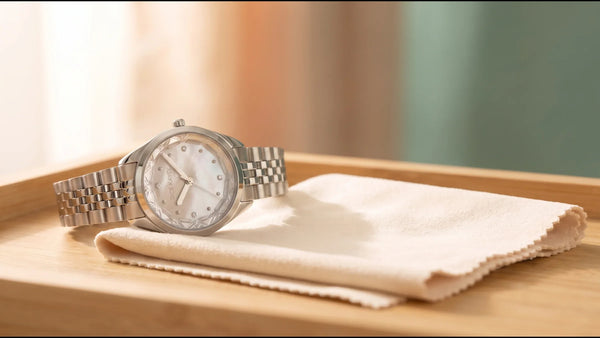
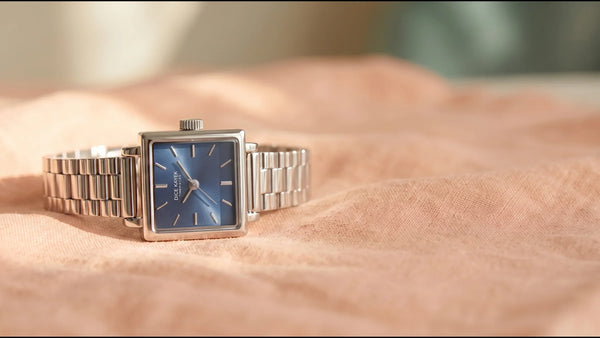
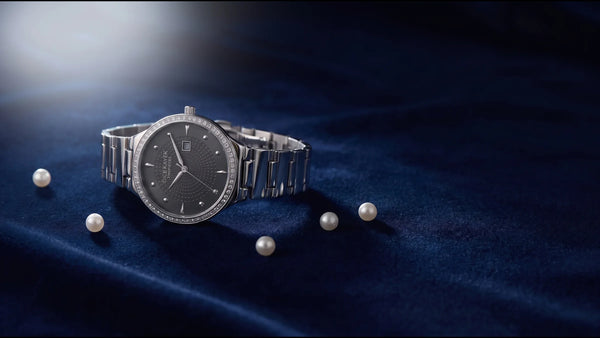
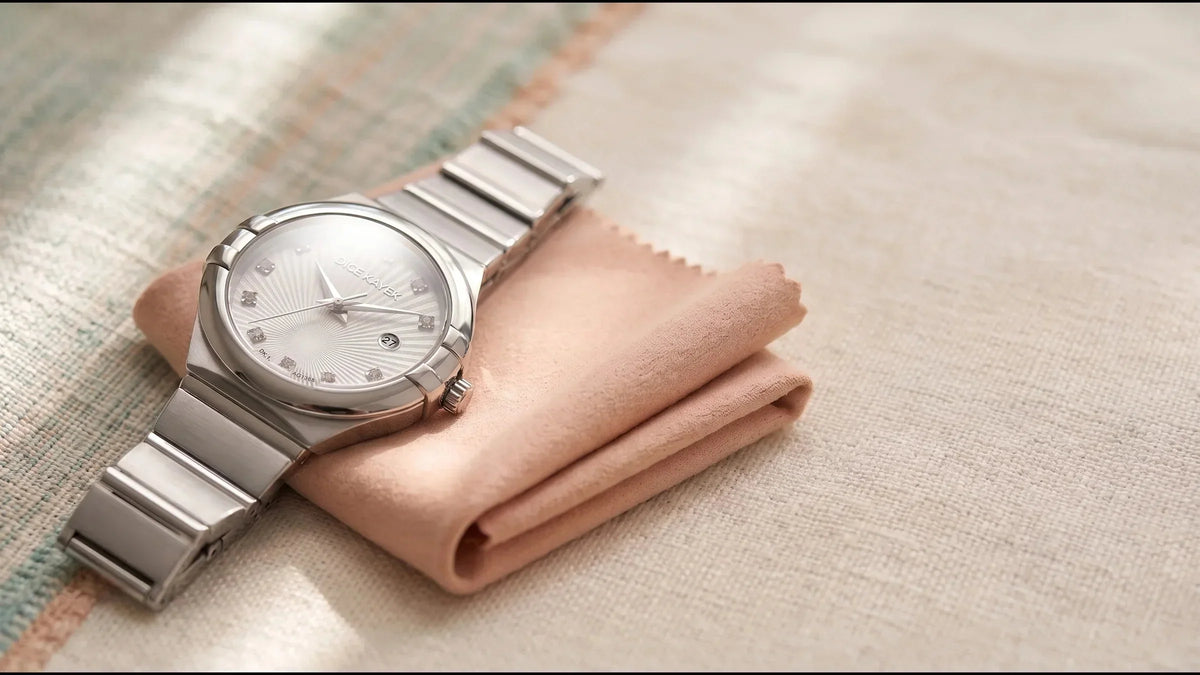
Short answer: Dice Kayek Timepieces women’s watches come standard with hardened mineral glass and a solid stainless steel case. Mineral glass tolerates everyday knocks but is not scratch-proof, so the prevention steps above and the authorised-service rule for crystal replacement apply to Dice Kayek Timepieces watches too.
Water resistance is 3–5 ATM depending on the model; the exact value is in the specifications table on the product page. Highlights from the steel bracelet models:
Collection
Women’s watches with steel bracelets
Hardened mineral glass and a solid stainless steel case and bracelet come standard on every model.
Browse steel bracelet watchesFrequently asked questions
How do you remove scratches from watch glass?
The method depends on the crystal type. Scratches on acrylic are polished out at home with an acrylic polishing paste. On mineral glass only very fine marks can be softened with special diamond pastes; a deep scratch means replacing the crystal. Sapphire rarely scratches and is replaced if damaged.
Can toothpaste remove scratches from watch glass?
No, toothpaste does not work on mineral or sapphire crystals; its abrasives are not hard enough to abrade them. On acrylic it may give a temporary improvement, but if it gets onto the case it can dull polished steel.
Does mineral glass scratch, and can it be polished?
Mineral glass can be scratched by harder particles such as sand and dust. Very fine marks can be softened with diamond paste kits made for mineral glass; for deep scratches that catch a fingernail, the most reliable solution is a crystal replacement.
What is the difference between acrylic and mineral glass?
Acrylic crystal is plastic; it is light and very impact-resistant but scratches easily, and its scratches can be polished out. Mineral glass is hardened real glass; it resists scratches better than acrylic, but its scratches cannot be polished out at home.
Is sapphire crystal scratch-proof?
Sapphire is not scratch-proof but is very hard to scratch; at 9 on the Mohs scale, only harder materials such as diamond can scratch it. Its weak point is impact; a hard knock can chip its edge.
How do you remove scratches from a watch case?
Superficial marks on a polished steel case can be reduced with a metal polishing cloth; deep marks need professional polishing. On brushed surfaces the direction of the grain must be kept. Gold-tone or rose-plated cases should not be polished.
Can steel watch scratches be polished at home?
Very fine marks on polished steel can be softened at home with a metal polishing cloth. On brushed steel, rubbing the wrong way leaves shiny patches; for deep scratches and a full refresh, professional polishing is safer.
Can scratches be removed from a gold-plated watch?
Polishing is not recommended on a gold-tone plated watch; it thins the plating and can expose the steel underneath. Plating wear is a result of normal use and is not covered by the warranty at most brands.
How do I know if my watch crystal needs replacing?
A crystal replacement is needed if there is a deep scratch that catches a fingernail, a crack, a chipped edge, condensation under the glass or dense scratching that spoils legibility. A watch with a cracked crystal should be kept away from water and taken to a service centre at once.
Is water resistance kept after a crystal replacement?
It is kept if the replacement is done at an authorised service centre, the gasket is checked and renewed if needed, and water resistance is tested. Water resistance also depends on the age of the gaskets, which is why a gasket check matters during a crystal replacement.
About this article
Written by: Dice Kayek Timepieces · Last updated: 12 October 2026
Crystal types, hardness values and the limits of polishing products have been checked against the sources below. Always use polishing products according to the manufacturer’s instructions and only on the crystal type they are made for.
Sources: