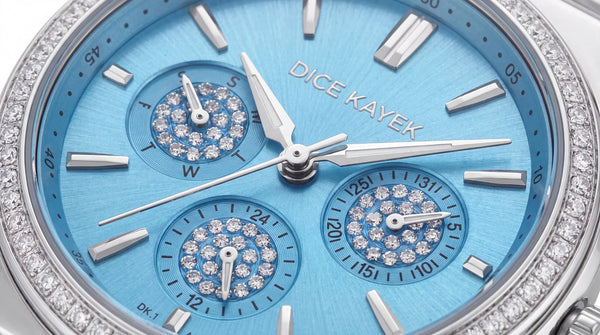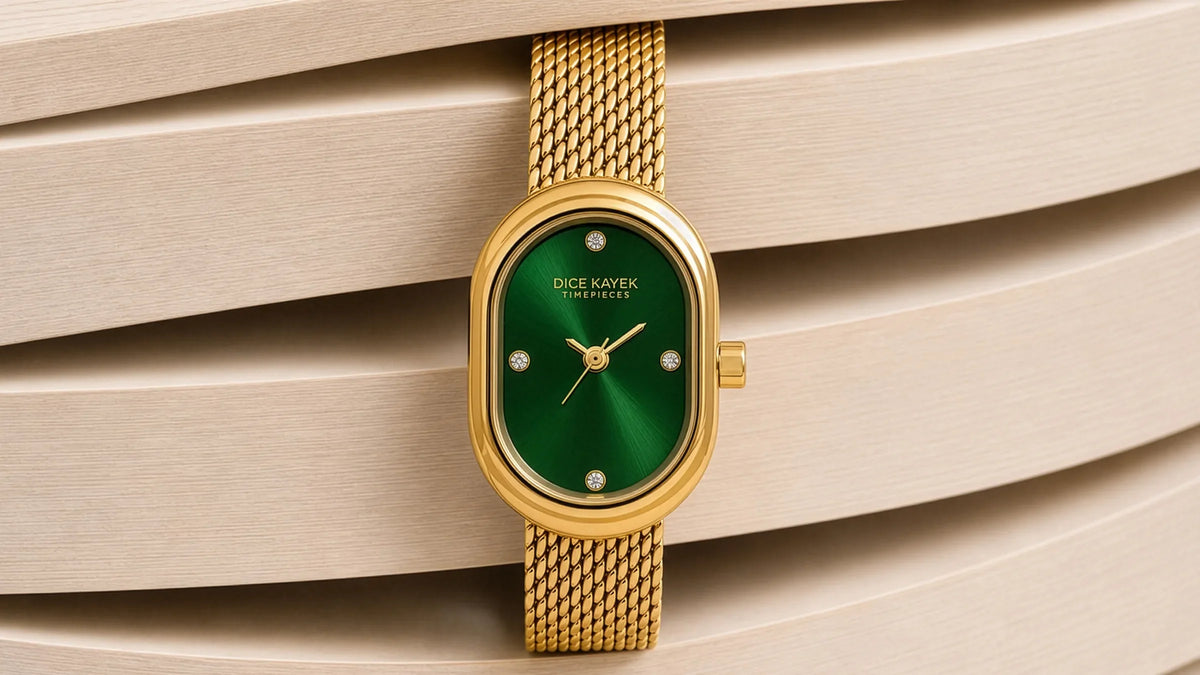
Gold watch models actually describe three different products: solid gold watches (14–18 carat, very high price), gold-plated watches (a thin layer of gold over a steel case) and gold-tone plated watches (no gold content, a gold-coloured coating applied by PVD or IP). The look most people want for daily wear is met by the second and third groups. Dice Kayek models are yellow-plated over steel; they are not solid gold.
Two people searching for a gold watch are often looking for two entirely different things: one wants a watch whose case is genuinely made of gold, the other wants a gold-look model that suits daily wear and is reasonably priced. The difference between the two runs to tens of thousands of lira, and it is the single most important thing to know before buying. This guide first clarifies that distinction, then explains what determines the price, whether gold in a watch holds its value, and how to extend the life of a plated watch.
In 30 seconds
- Three products: solid gold (hallmarked) · gold-plated · gold-tone plating (PVD/IP).
- If the specification only says "plated", "gold" or "yellow", it is not solid gold.
- 14-carat is harder and more durable; 18-carat has a richer tone but is softer.
- To keep the plating from fading: stay away from perfume, chlorine, salt and chemicals; wipe with a dry cloth.
- Value: it follows the brand, not the gold content; a plated watch has no gold value.
Which three products does "gold watch" actually describe?
Short answer: Solid gold (the case is made of gold), gold-plated (gold measured in microns over steel) and gold-tone plating (a PVD/IP layer with no gold content). The wording in the product specification tells you which group a watch belongs to: for solid gold, the carat (14K, 18K) and hallmark details are stated clearly.
| Type | Construction | Price level | Who it is for |
|---|---|---|---|
| Solid gold | The case (sometimes the bracelet too) is made of 14, 18 or 22-carat gold | Very high | Collecting, heirlooms, special occasions |
| Gold-plated | A thin layer of gold over a steel case (plating thickness measured in microns) | Mid to high | Appearance first, regular wear |
| Yellow / gold-tone plating | A gold-tone coating applied over a steel case by PVD or IP | Accessible | Daily wear, gifts |
What does carat mean? The difference between 14-carat and 18-carat
Short answer: Carat is the proportion of gold in the alloy: 14-carat is 58.5%, 18-carat is 75%, 22-carat is 91.6%. Pure gold (24-carat) is very soft; 14-carat is the most balanced point between durability and gold content, while 18-carat has a richer tone but is softer.
- 14-carat (585): 58.5% gold. Harder and more scratch-resistant; an advantage in daily wear.
- 18-carat (750): 75% gold. A richer yellow tone; softer, so it scratches more easily.
- 22-carat (916): 91.6% gold. Rarely used for watch cases; a high risk of deformation.
How is gold plating made, does it tarnish, and how long does it last?
Short answer: In modern watches the gold tone is achieved by PVD (physical vapour deposition) or IP (ion plating); both are far more durable than traditional electroplating and keep their colour for years with proper care. Fading and dulling appear most often after chemical contact and at points of friction.
- PVD: Metal vapour is deposited onto the surface in a vacuum chamber; a thin but hard layer.
- IP: An advanced form of PVD; because ions strike the surface at high energy, it offers stronger adhesion and greater wear resistance.
Plating is not permanent: the areas that wear most are the joints of the bracelet links, the clasp and the surface of the case that touches the wrist. Plating wear is a result of normal use and, as with most brands, is not covered by the Dice Kayek warranty: warranty and service.
5 habits that extend the life of the plating
- Do not use perfume, hairspray or cologne while wearing the watch; alcohol and chemicals are the fastest way to wear plating down.
- After the pool or the sea, rinse the watch in fresh water and dry it; chlorine and salt are abrasive.
- Take the watch off when working with cleaning products.
- Wipe the watch with a soft, dry cloth; do not use abrasive sponges or metal polish.
- Have the bracelet length adjusted properly; a bracelet that keeps moving on the wrist wears faster through friction. Watch care guide.
What determines the price of a gold watch?
Short answer: Four components: material (weight and carat for solid gold, thickness and method for plating), movement (quartz, automatic, manufacture), craftsmanship and design (case shape, surface finishing, stone setting) and brand positioning. Two watches with the same technical specifications can be priced many times apart depending on the brand's heritage.
Is a gold watch an investment?
Short answer: A solid gold case has a scrap value, but it represents only a fraction of the purchase price; the main factor that determines resale value is the brand. Gold-plated watches have no gold value; these products are bought for their design and for wearing.
- Craftsmanship, movement and brand premium are not reflected in scrap value.
- Certain models from certain brands hold their value; most watches lose value on the second-hand market. Criteria for evaluating a brand: the best watch brands.
- The original box, the warranty card and the condition of the watch are decisive for second-hand value.
Note: This section is for general information only and is not investment advice.
Who does a gold tone suit?
Short answer: Yellow gold looks most natural on warm-undertone skin; on cool undertones silver, or rose gold if gold is preferred; on neutral undertones two-tone models are the most flexible solution. For pairing with jewellery there is one rule: the watch, rings and bracelets should belong to the same metal family, or a deliberate transition should be made with a two-tone watch.
- Warm undertone (wrist veins look greenish) → yellow gold tone.
- Cool undertone (veins look bluish) → silver; if gold is preferred, rose gold.
- Neutral undertone → two-tone models.
For how to choose a plating colour and the other criteria, see how to choose a women's wristwatch; for what a gold-tone watch means as a gift, see what to consider when giving a woman a watch.
Gold-tone women's watch models
The strips below read stock levels live; models that have sold out do not appear in the list. All models are plated over solid stainless steel; they are not solid gold.
Yellow-plated classics
Rose and two-tone alternatives
Case colour
See all gold-tone models
Compare the yellow-plated models by filtering on dial colour, case shape and dial diameter. A quartz movement, a solid stainless steel case and hardened mineral crystal are standard across all models; the water resistance rating is stated on the product page.
Gold-tone models →Checklist for buying a gold watch
- Read the product specification. Does it say "plated" or "14K/18K gold"? That one line tells you what the product is.
- If you are buying solid gold, ask about the hallmark. A 585 or 750 stamp indicates the carat.
- For a plated product, clarify what the warranty covers. Plating wear is excluded by most brands; this is normal, but it should be known from the start.
- Is the price realistic? A solid gold watch cannot cost less than the value of the same weight of gold; it is the most practical way to verify.
- Service and spare parts. Replacing a bracelet or clasp will come up over the years; ask whether the brand supplies spare parts. The full buying checklist: what to consider when choosing a women's watch.
For this year's plating and dial directions, see 2026 women's watch trends.
Frequently asked questions
What is the difference between a gold watch and a gold-plated watch?
In a solid gold watch the case is made of 14, 18 or 22-carat gold and carries a hallmark. In a gold-plated watch a thin layer of gold or gold-tone material is applied over a steel case; this layer does not contain an economically recoverable amount of gold. If the product specification only says "plated", "gold" or "yellow plated", the watch is not solid gold.
Which is better for a gold watch, 14-carat or 18-carat?
14-carat gold (58.5% gold) is harder and more scratch-resistant, which is an advantage in daily wear. 18-carat gold (75% gold) offers a richer yellow tone but is softer and scratches more easily. If daily wear is your priority, 14-carat is the better choice; if appearance comes first, 18-carat is more suitable.
Does a gold-plated watch tarnish, and how long does it last?
Modern coatings applied by PVD and IP methods are noticeably more durable than traditional electroplating and keep their colour for years with proper care. Fading and dulling appear most often after contact with perfume, chlorine, salt water and cleaning chemicals, at the joints of bracelet links and on the clasp; plating wear is excluded from the warranty by most brands.
Is a gold watch an investment?
A solid gold case has a scrap value, but that value represents only a fraction of the purchase price; craftsmanship, movement and brand premium are not reflected in scrap value. The main factor that determines a watch's resale value is the brand, not the gold content. Gold-plated watches have no gold value. This information is general in nature and is not investment advice.
Who does a gold-tone watch suit?
On warm-undertone skin, where the veins on the wrist look greenish, yellow gold is the most natural option. On cool undertones, where the veins look bluish, silver is more harmonious; if gold is preferred, rose gold offers a softer transition. On neutral undertones, two-tone models are the most flexible solution.
How do you clean a gold-plated watch?
Wiping with a soft, dry cloth is enough. Abrasive sponges, metal polish and chemical cleaners should not be used. After the pool or the sea, the watch should be rinsed in fresh water and dried; chlorine and salt wear the plating down.
Are Dice Kayek gold watches solid gold?
No. Dice Kayek Timepieces models are yellow, rose or two-tone plated over a solid stainless steel case and bracelet; they are not solid gold and are described as "plated" in the product specifications. Plating wear is a result of normal use and is not covered by the warranty.
About this article
Prepared by: Dice Kayek Timepieces Editorial Team · Editorial review: Dice Kayek product and customer experience team · Last updated: 22 September 2026
Carat proportions and plating methods are based on standards widely accepted in jewellery and watchmaking. The section on value retention is for general information only and is not investment advice. Price and stock information is read live in the strips.
Related guides: Watches by case colour · Watch care guide · Warranty and service
Questions & suggestions: You can write to our customer service team.