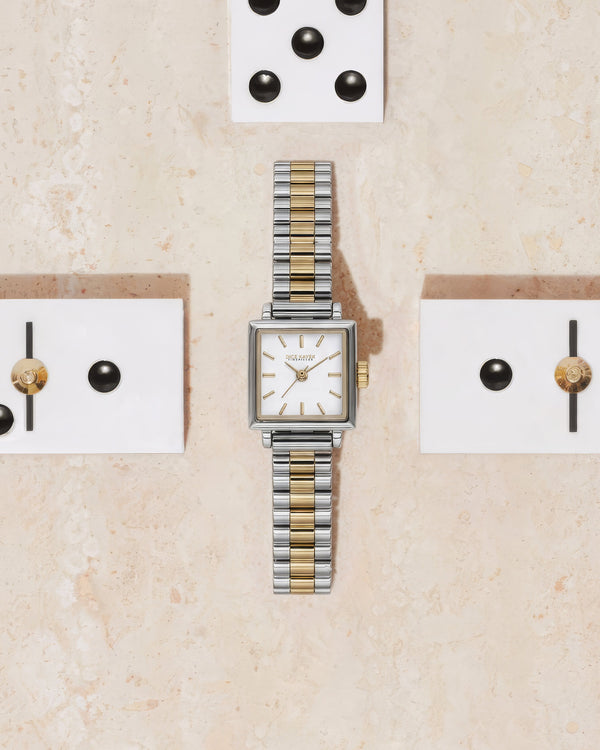
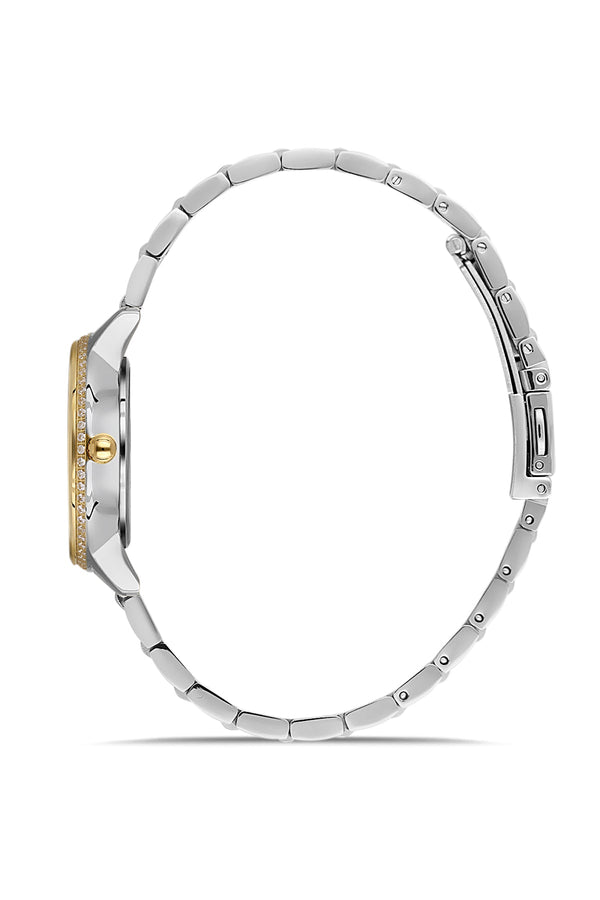
A watch is one of the most extraordinary objects humanity has invented: it makes an abstract concept — time — visible. That is why it is not only an instrument but also a symbol. The meanings of watches carry a cultural weight strong enough to make a gift either welcome or strange.
This guide covers what a watch has said through history, how it is read in different cultures, what message it sends when given as a gift, and where the common superstitions actually come from.
Short answer
A watch carries three fundamental meanings: the value of time ("I know the worth of your time"), continuity ("this relationship is lasting") and a threshold ("a new period is beginning"). In Turkish culture, giving a watch at moments such as an engagement, a betrothal, a graduation, a retirement or a new home arises from these three meanings.
The belief that "giving a watch is bad luck" does not belong to Turkish culture; its source is a homophone in Mandarin.
Why is a watch such a powerful symbol?
For an object to become a symbol it has to carry three qualities at once: universality, continuity and intimacy. A watch meets all three.
- Universal: The concept of time exists in every culture and means the same thing to everyone.
- Continuous: A watch runs without stopping. Given as a gift, it is one of the rare objects that sustains the presence of the giver.
- Intimate: It is worn on the wrist, in contact with the skin. That physical closeness strengthens the symbolic closeness.
The watch through history: from instrument to object of status
The symbolic weight of the watch changed alongside its technical development.
- Sundials and water clocks. The first timekeepers were public objects; they stood in city squares and set the rhythm of communal life. Their meaning was order.
- Mechanical tower clocks. Installed in city towers in medieval Europe, they took time from nature and handed it to society. Their meaning was authority.
- Pocket watches. The personalisation of time. Because only the wealthy could carry one, its meaning became status.
- Wristwatches. They spread through practical necessity in the First World War and became the emblem of modern life afterwards. Their meaning was independence and control.
- The post-quartz era. Once the time was freely available on a phone, the wristwatch ceased to be a functional necessity and became entirely a matter of choice. Today, wearing a watch is less a need than a form of expression.
That last point matters: someone who wears a watch today does so because they do not have to. That loads the object with an additional layer of meaning.
The meaning of giving a watch
The meaning of giving a watch is read differently according to the relationship between giver and recipient; but the core message is always the same: time.
| Context | The meaning it carries |
|---|---|
| Engagement | "From now on we will count the time together" |
| A wedding anniversary | "The time that has passed was valuable" |
| Graduation | "You now carry responsibility for your own time" |
| Retirement | "From now on your time belongs to you" |
| A gift for a teacher | "Thank you for the time you gave us" |
| A new home | "May the time spent in this house be good" |
| For a partner | "I want to spend my time with you" |
The watch across cultures: similarities and differences
In Turkish culture
The watch is the gift of threshold moments. Giving one to someone leaving for military service, graduating, becoming engaged or retiring is a long-established habit. The meaning here lies somewhere between "may your road be open" and "your time is precious". A watch is also an object of transmission between generations: a watch passed from grandfather to grandchild is a tangible carrier of family memory.
In Chinese culture: a taboo born of a pun
In Mandarin, the phrase for "giving a clock" (sòng zhōng) is a homophone of the phrase meaning "attending a funeral". For that reason, giving wall and table clocks in particular is avoided in China. Born entirely of a linguistic coincidence, this taboo generally does not extend to wristwatches and has no equivalent in any other language.
In Western culture
Giving a watch on retirement to someone who has worked many years in corporate life (the "gold watch" tradition) is an established practice. Its meaning is direct: the return for the time you gave us.
In Japanese culture
The emphasis on craft and continuity comes to the fore. A watch is also read as "carrying the labour of a master"; who made the movement and how is therefore part of the gift's meaning.
Common beliefs: which are true?
- "Giving a watch leads to separation." It does not belong to Turkish culture; its source is the Mandarin homophone described above. In Türkiye a watch is a gift that begins and strengthens relationships.
- "A stopped watch brings bad luck." A stopped watch simply means the battery has run out. But because a dead battery can leak and damage the movement, it should be replaced quickly for practical reasons. In detail: How long does a watch battery last?
- "The wrist you wear a watch on shows your personality." A popular claim, but it has no scientific basis; the preference is largely explained by handedness and comfort. In detail: Which wrist should a watch be worn on?
- "Repeating times (11:11, 22:22) carry a message." This belief comes from numerology and has no scientific basis. In psychology it is explained by selective attention: once you attach meaning to a sequence of numbers you notice it more often, and you do not count all the other times you did not notice.
The language of watch design itself
A watch's design carries a message too. Knowing that language makes choosing a gift far more accurate.
- Roman numerals: tradition, continuity, classical values. The Romana collection
- A pared-back dial with no numerals: clarity, modernity, an avoidance of display. The Pura collection
- An angular case shape: design awareness, architectural thinking, a step away from the ordinary. Square and rectangular models
- Stone detailing: celebration, a special moment, light. Stone-set models
- A gold tone: warmth, value, classical richness. Gold-toned models
- A silver / steel tone: composure, function, timelessness. Silver models
A meaningful gift
Models chosen to mark a moment
An edit prepared for engagements, anniversaries, graduations and moments of thanks. Pieces that can still be worn years later, in timeless case shapes with elegant dial designs.
See gift watches →The easiest way to make a gift's meaning clear
There is one tool that removes any ambiguity of interpretation with a watch: the note card. Rather than leaving the meaning for the other person to guess, say it yourself in a single sentence.
- Engagement: "Let's count what comes next together." — giving your partner a watch
- Anniversary: "Thank you for every year that has passed." — the anniversary gift guide
- Graduation: "Your time is your own now."
- For a teacher: "For every minute you gave us." — the Teachers' Day guide
- A new home: "Good times in this house." — the housewarming gift guide
Frequently Asked Questions
What does giving a watch mean?
A watch as a gift carries three fundamental meanings: the value of time ("I know the worth of your time"), continuity ("this relationship is lasting") and a threshold ("a new period is beginning"). In Turkish culture, giving a watch at moments such as an engagement, a betrothal, a graduation, a retirement or a new home arises from these meanings.
Does giving a watch bring bad luck?
No. This belief is a local Chinese tradition arising from the fact that the Mandarin phrase for "giving a clock" is a homophone of the phrase meaning "attending a funeral", and it applies to wall and table clocks in particular. No such tradition exists in Turkish culture; a watch is a long-established gift carrying positive meanings.
Why is a watch given on retirement?
As a retirement gift, a watch carries both the message "the return for the time you gave" and "from now on your time belongs to you". Giving a watch to people who have worked many years in corporate life is an established practice in both the West and Türkiye.
Is a stopped watch unlucky?
No; a stopped watch simply means the battery has run out. But leaving a dead battery inside the watch for a long time can cause it to leak and permanently damage the movement, so the battery should be replaced quickly. That is a practical necessity, not a superstition.
Does seeing repeating times (11:11, 22:22) mean anything?
This belief comes from numerology and has no scientific basis. In psychology it is explained by selective attention: once you attach meaning to a sequence of numbers you notice it more often, and you do not take into account all the other times you did not notice.
Which watch design sends which message?
Dials with Roman numerals evoke tradition and continuity; pared-back dials with no numerals, modernity and an avoidance of display; angular case shapes, design awareness; stone detailing, celebration and a special moment; a gold tone, warmth and value; and a silver tone, function and timelessness.
About this content
Written by: The Dice Kayek Timepieces Editorial Team · Editorial review: Dice Kayek product and customer experience team
The technical information in this guide (case sizes, movements, water resistance, crystal and strap types) is based on the technical specifications of Dice Kayek Timepieces collections and on standards widely accepted in the watchmaking industry. Price and stock information reflects values at the date of publication; please check the product pages for current details.
Related guides: Watch sizing guide · Watch care guide · Warranty and service
Questions & suggestions: Write to our customer service team.