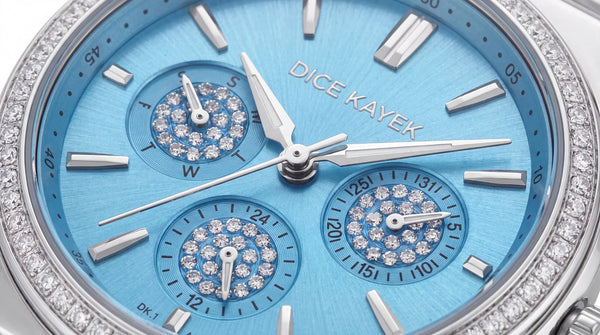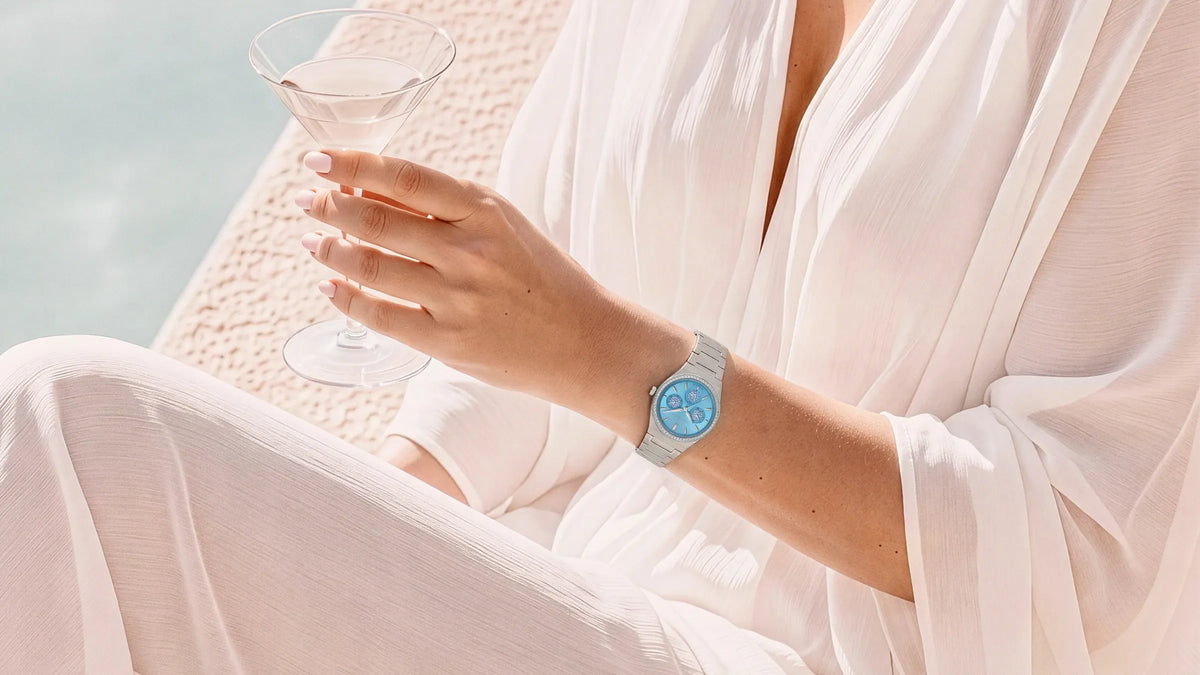
Which wrist should a watch be worn on? Traditionally the non-dominant wrist: the left for right-handed people, the right for left-handed people. There are two reasons: the watch takes fewer knocks, and the crown on the right side of the case turns comfortably with the dominant hand. It is not a strict rule; wearing a watch on the right wrist is not wrong, and the claim that it carries a "meaning" about personality has no basis.
Wearing a watch looks like a simple daily habit, yet behind it lie both a century-old tradition and an entirely practical engineering logic. This guide goes beyond the short answer: exactly where the watch should sit on the wrist, how tight the strap should be, how the picture changes for women, left-handed people and smartwatches, and the etiquette that proves useful in everyday life.
In 30 seconds
- Wrist: the non-dominant wrist; left for right-handed people, right for left-handed people.
- Position: just above the wrist bone, towards the arm; not on the bone itself.
- Tightness: the one finger rule; the watch should not spin or leave a mark.
- The right wrist is not wrong; the claim that it has a "meaning" is not scientific.
- If you wear a lot of jewellery, the watch goes on the wrist with less of it.
Why is a watch worn on the left wrist?
Short answer: Three separate reasons lead to the same result: the crown is on the right of the case and is turned with the right hand when the watch is on the left wrist; the dominant hand takes more knocks; and the wristwatch spread through military use, worn on the wrist that did not hold a weapon.
1. The mechanical reason: the position of the crown
On the great majority of wristwatches the crown sits on the right side of the case, at the 3 o'clock position. When the watch is worn on the left wrist, the crown can be turned with the thumb and index finger of the right hand without taking the watch off. On the right wrist the crown faces the hand and adjusting it becomes awkward. On quartz watches, which need no winding, this reason has weakened, but the design habit continues.
2. The practical reason: knocks and wear
Writing, carrying, opening doors, cleaning: all of it is done with the dominant hand. Wearing the watch on the non-dominant wrist clearly reduces the risk of a scratched crystal and a knocked case. It is the one habit that directly extends the life of a watch.
3. The historical reason: military use
The wristwatch became widespread because the pocket watch was impractical on the battlefield. Soldiers wore the watch on the wrist opposite the hand that held their weapon; movement was not restricted and the watch was protected. The habit that passed into civilian life was born there.
Is wearing a watch on the right wrist wrong? Does it mean anything?
Short answer: It is not wrong. For left-handed people, those with a bracelet or medical ID on the left wrist, those whose work keeps the left wrist in constant contact with surfaces, and those for whom it is simply habit, the right wrist is the correct choice. Claims such as "people who wear a watch on the right are creative" have no scientific basis.
- If you are left-handed. The same logic works in reverse: the non-dominant wrist is the right one.
- If there is something else on your left wrist. A bracelet, a fitness band or a medical ID.
- If your work requires it. In jobs where the left wrist is in constant contact with a surface, a watch wears faster on the left wrist.
- If it is your habit. This is the most valid reason of all.
Popular culture circulates claims such as "right-wrist wearers are creative, left-wrist wearers are traditional"; the choice is largely explained by handedness and comfort. The symbolic meaning carried by the watch itself, on the other hand, is real and culturally deep-rooted: the meanings of watches. Models made for left-handed wearers, with the crown on the left side, do exist; they are not common.
Which wrist should a woman wear her watch on?
Short answer: Technically there is no difference; the non-dominant wrist. In practice two further variables come into play: the amount of jewellery worn and the case size. The watch usually goes on the wrist with less jewellery; a small case and a slim strap make the correct position above the wrist bone more important.
- Balancing jewellery. Because it is worn alongside bangles, bracelets and a wedding ring, the watch goes on the wrist where jewellery is not concentrated. This sometimes reverses the traditional rule. For matching metals, see ring size and pairing a ring with a watch.
- Case size and comfort. Since women's watches have a smaller case and a narrower strap, the watch sits on the slimmer part of the wrist, and the correct position matters more. Case diameter by wrist size: how to choose a women's watch.
Where exactly should a watch sit on the wrist?
Short answer: The case should sit just above the wrist bone (the ulnar styloid), towards the arm. If it sits on the bone the watch rocks and the case knocks against the bone; if it sits too high it gets caught under the cuff and does not look natural.
How tight should the strap be? The "one finger" rule
One finger should slide comfortably between the strap and the wrist, but the watch should not spin freely on the wrist. This balance prevents sweat and moisture from building up, stops the case from knocking against desks and other surfaces, and keeps sensor readings accurate on smartwatches. On steel link bracelets the length is adjusted by removing links at an authorised service centre; mesh bracelets adjust steplessly and are therefore the most flexible option. Strap types and adjustment steps: watch strap types.
A watch under the cuff: case thickness
For a watch that sits under a shirt or jacket cuff, a slim case of 7–9 mm is comfortable; cases over 10 mm catch on the cuff. If the watch rides up the arm under thick clothing, loosening the bracelet by one link is the practical fix; the winter details are in the guide to which watch to wear in winter.
Which wrist should a smartwatch be worn on?
Short answer: The same logic as a classic watch: the non-dominant wrist. The optical heart-rate sensor reads correctly when the watch sits one to two finger-widths above the wrist bone at medium tightness. Most smartwatches let you select the wrist in the settings; this affects the accuracy of step and movement counting.
Health and practical notes
- Blood-pressure readings. There should be no watch on the arm used for a blood-pressure reading; the cuff will not fit correctly and the result will be inaccurate.
- Skin sensitivity. A strap worn tight for long periods can cause irritation through a build-up of sweat. Taking the watch off once a day and drying the wrist is enough.
- Nickel sensitivity. If contact sensitivity appears with metal bracelets, choose stainless steel or plated models; if symptoms persist, consult a dermatologist.
- Switching wrists. A watch always worn on the same wrist wears its plating more on that wrist; adjusting the strap correctly reduces friction.
Etiquette for wearing a watch
- How to check the time in a meeting. Raising the arm and staring at the watch tells the other person "I am in a hurry". The natural way is a brief glance while the arm is in its normal position.
- At the dining table. A thick case can knock against the table and make a noise; when resting your arm on the table, be mindful of the watch side.
- Handshakes. If the watch is on the wrist of the hand you shake with, it is the first accessory to be noticed; this is why a simple design is preferred in formal settings.
- Two watches at once. Wearing a watch on each wrist at the same time is not generally accepted, apart from special situations such as tracking a second time zone.
Comfort first
Choose the model that fits your wrist
Filter by dial diameter (under 28 mm, 29–32 mm, over 33 mm) to choose the case size that suits your wrist, and put comfort first with the mesh and steel bracelet options.
Explore women's watches →6 habits for wearing your watch well
- Wear the watch on the non-dominant wrist; it is the simplest habit that extends its life.
- Adjust the strap according to the "one finger" rule.
- Do not use perfume or hairspray while wearing the watch; the chemicals wear down the plating.
- After adjusting, push the crown fully back into place; a half-open crown removes the water resistance.
- Wipe the strap once a week with a soft dry cloth; dirt that builds up between the links is abrasive. Watch care guide.
- On days you do not wear it, keep the watch in its box, away from direct sunlight. Signs of a failing battery: how long does a watch battery last.
Frequently asked questions
Which wrist should a watch be worn on?
A watch is traditionally worn on the non-dominant wrist: the left wrist for right-handed people, the right wrist for left-handed people. There are two reasons: the watch takes fewer knocks, and the crown on the right side of the case can be turned comfortably with the dominant hand. It is not a strict rule; comfort and habit come before tradition.
Is wearing a watch on the right wrist wrong, and does it mean anything?
It is not wrong. For left-handed people the right wrist is already the correct choice; a bracelet or medical ID on the left wrist, a job in which the left wrist takes more contact, or simple habit are all valid reasons too. The claim that wearing a watch on the right wrist says something about personality has no scientific basis.
Which wrist should a woman wear her watch on?
The technical logic is the same: the non-dominant wrist. For women, however, the amount of jewellery worn, such as bracelets, bangles and a wedding ring, can influence the choice; the watch usually goes on the wrist with less jewellery. Because the case is smaller and the strap narrower, the correct position just above the wrist bone matters more.
Where should a watch sit on the wrist?
The case should sit just above the wrist bone (the ulnar styloid), towards the arm. If it sits directly on the bone the watch rocks and the case knocks against the bone, causing both discomfort and scratches; if it sits too high it gets caught under the cuff.
How tight should a watch strap be?
One finger should slide comfortably between the strap and the wrist, but the watch should not spin freely on the wrist. This balance prevents sweat from building up, stops the case from knocking against surfaces and keeps sensor readings accurate on smartwatches.
Which wrist should a smartwatch be worn on?
The same logic as a classic watch applies: the non-dominant wrist. For the optical heart-rate sensor to read correctly, the watch should sit one to two finger-widths above the wrist bone and be worn at medium tightness. Most smartwatches let you select which wrist you wear them on in the settings; this affects the accuracy of movement counting.
Should a watch be removed when measuring blood pressure?
Yes. There should be no watch on the arm used for a blood-pressure reading; the cuff will not fit correctly and the result may be inaccurate.
About this article
Prepared by: Dice Kayek Timepieces Editorial Team · Editorial review: Dice Kayek product and customer experience team · Last updated: 22 September 2026
The technical information in this guide is based on widely accepted standards in watchmaking and on Dice Kayek Timepieces product specifications. The health notes are for general information only; if a skin reaction persists, consult a doctor.
Related guides: Watch size guide · Watches by strap · Watch care guide · Warranty and service
Questions & suggestions: You can write to our customer service team.