Short answer: 5 ATM water resistance means the watch withstood 5 atmospheres (roughly 50 metres) of static water pressure in a laboratory test without leaking. It is not a diving depth. In everyday life, 5 ATM covers rain, hand washing, splashes and brief contact with calm water. 3 ATM is for splashes and hand washing only, and both ratings should be kept away from hot water and steam.
Seeing "5 ATM", "50 M" or "5 BAR" on a case back or in a product sheet and assuming the watch can go swimming in the sea is one of the most common misunderstandings in watch buying. This guide explains what the water resistance label actually measures, the practical difference between 3 ATM and 5 ATM, and how to keep that protection for years. We cover the other criteria for choosing a women's watch (case size, strap, glass) separately in our guide to choosing a women's watch.
Contents
- What does 5 ATM water resistance mean?
- Are ATM, bar and metres the same thing?
- What is the difference between 3 ATM and 5 ATM?
- Can you shower or swim in the sea with a 5 ATM watch?
- How is water resistance tested, and why does it decrease over time?
- What should you do if the watch glass fogs up?
- Where is the water resistance rating shown on Dice Kayek watches?
- Frequently asked questions
What does 5 ATM water resistance mean?
5 ATM water resistance is a rating that shows a watch was tested under 5 atmospheres of pressure and that the case did not let water in at that pressure. One atmosphere is roughly equal to the pressure of a 10-metre column of water, so 5 ATM watches are also sold as "50 M" or "5 BAR". The value describes the laboratory test pressure, not the depth at which the watch can be used.
The international reference for water-resistant watches is the ISO 22810 standard. It covers watches for everyday use and swimming; diving watches fall under a separate standard (ISO 6425). In other words, a women's watch labelled 5 ATM is, by definition, not a diving watch but an everyday watch that resists water.
Manufacturers' user manuals keep the same distinction. Citizen, for example, states that watches rated 5 bar can be used for work involving frequent contact with water and for ordinary swimming, but are not suitable for free diving. Seiko stresses that water resistance is not permanently guaranteed and may weaken as gaskets age or after an impact. That is why 5 ATM is best read as a "safety margin against water", not as "use under water".
Are ATM, bar and metres the same thing?
ATM (atmosphere) and bar are both units of pressure and are treated as equal in watchmaking: 1 ATM ≈ 1 bar ≈ a 10-metre column of water. Watchmakers write the same rating in different units, so "5 ATM", "5 BAR" and "50 M / 165 FT" all describe the same test value. The metre figure is the water-column equivalent of the pressure, not a diving depth.
Confusion usually comes from the metre figure. "Water resistant to 50 metres" does not mean the watch can be taken on a dive to 50 metres. The test is done in still water, at constant pressure and for a short time; in real life, water moves, temperatures change and watches take knocks. That is why there is always a margin between the value on the label and safe use.
| Marked on the case | In bar | In metres (test) | What it does not mean |
|---|---|---|---|
| 3 ATM | 3 bar | 30 m | You can go 30 metres under water |
| 5 ATM | 5 bar | 50 m | You can dive to 50 metres |
| 10 ATM | 10 bar | 100 m | It is a scuba diving watch |
What is the difference between 3 ATM and 5 ATM?
The difference between 3 ATM and 5 ATM is the safety margin a watch keeps against water. A 3 ATM watch withstands sweat, rain and splashes while washing your hands, but should not be submerged. A 5 ATM watch also tolerates more frequent contact with water and brief use in calm water. Hot water, steam and pressurised water are risks shared by both ratings.
The table below summarises everyday situations. The recommendations follow the general classification in manufacturers' user manuals; if your watch's manual or product page states a different limit, that always takes priority.
| Situation | 3 ATM | 5 ATM | Note |
|---|---|---|---|
| Sweat, rain, splashes | Suitable | Suitable | Wipe with a dry cloth afterwards |
| Hand washing, splashes at the sink | Suitable (briefly) | Suitable | Soap and detergent wear the gaskets |
| Shower | Not recommended | Not recommended | Hot water, shampoo and water pressure are shared risks |
| Calm swimming in a pool or the sea | Not suitable | Briefly, with care | For regular swimming, choose 10 ATM |
| Jumping in, snorkelling, diving | Not suitable | Not suitable | Sudden pressure exceeds the test value |
| Sauna, hammam, hot tub | Not suitable | Not suitable | Heat expands gaskets and steam gets in |
The shower row deliberately says "not recommended" for both ratings. Some sources say a 5 ATM watch can survive a shower; however, a shower combines hot water, shampoo and pressurised flow, and each of these puts its own strain on the gaskets. Taking the watch off before you shower is the simplest way to keep its water resistance for years.
Can you shower or swim in the sea with a 5 ATM watch?
A 5 ATM watch is tested to withstand brief contact with calm sea or pool water, but it is not designed for regular swimming, jumping into water or diving. In the shower, hot water and soap strain the gaskets, so it is best to take the watch off. If you plan intensive contact with water, look at ratings of 10 ATM and above.
In real life, water is not still. Your arm striking the water during a stroke, walking into a wave or jumping into a pool creates momentary pressures above the test value. Salt water and chlorine also wear gaskets and metal surfaces over time. So if you have been in the sea with a 5 ATM watch, it is a good habit to rinse it briefly in fresh water and dry it with a soft cloth.
While the watch is in contact with water, do not pull out or turn the crown. The crown is the most sensitive point of the case; opening it in water disables the gasket. Always set the date or time with dry hands.
How is water resistance tested, and why does it decrease over time?
Water resistance is measured with the tests defined in the ISO 22810 standard: these include brief immersion, leak-tightness at a set pressure, strain on the crown and pushers, and sudden temperature change. A watch passes the test when it is new and its gaskets are intact; the rating describes the watch on its first day.
Water resistance is not permanent because of the gaskets. The rubber gaskets around the case back, the glass and the crown lose elasticity with heat, cosmetics, sweat and time. A drop or knock can cause deformation in the case that is invisible to the eye. Opening the case back during a battery change also requires the gasket to be seated correctly again.
- Protect it from heat: Do not take the watch into hot showers, saunas or hammams, and do not leave it on hot surfaces in the sun.
- Keep chemicals away: Perfume, lotion and detergent dry out gaskets; apply them before you put the watch on.
- Dry it after contact with water: Especially after salt water and chlorine, rinse it gently in fresh water and dry it.
- Keep the crown closed: Do not pull the crown out while there is contact with water; set the watch in a dry place.
- Have the battery changed at an authorised service: Ask for the gasket to be checked when the case is opened.
We explain battery life and how a battery change affects water resistance in detail in how long does a watch battery last.
What should you do if the watch glass fogs up?
Seeing fog or a drop of water inside the watch glass is a sign that moisture has entered the case and needs prompt attention. Do not put the watch on a hot surface, do not open the crown, and take it to an authorised watch service without delay. Moisture inside can, over time, stain the dial and corrode the movement.
Fog is sometimes caused only by a sudden temperature difference; for example, it can appear briefly and disappear when you move from cold air into a warm room. But if the fog persists or droplets form under the glass, the gasket has failed. The Dice Kayek warranty covers manufacturing defects; damage from exposure beyond the water resistance rating is not covered. The details are on our warranty and service page.
Where is the water resistance rating shown on Dice Kayek watches?
The water resistance rating of each Dice Kayek model is listed in the "Water resistance" row of the technical specifications table on its product page. Most models in the collection are 3 ATM, and some are 5 ATM. A solid stainless steel case, hardened mineral glass and a quartz movement are standard on every model.
Think about how you wear a watch before you buy. If it will mostly be worn at the office, at dinners and around the city, 3 ATM offers a sufficient safety margin. If you wash your hands often, spend a lot of time in the rain or plan to wear the watch on a summer holiday, 5 ATM models are more relaxed to live with. If you are curious about what is inside the watch, have a look at what is a quartz watch.
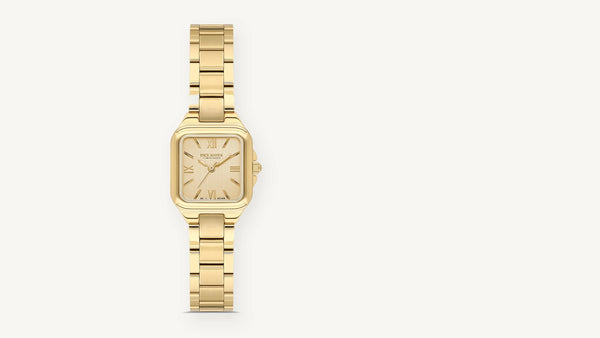
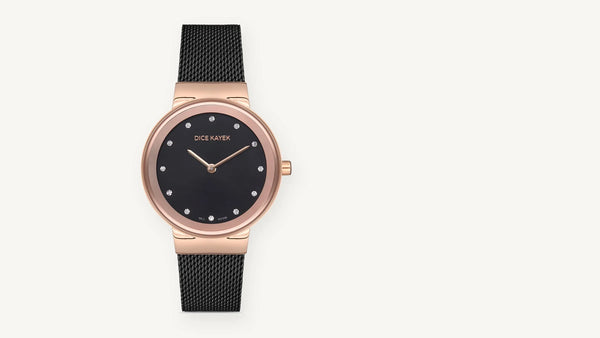
Featured 5 ATM models for more frequent contact with water:
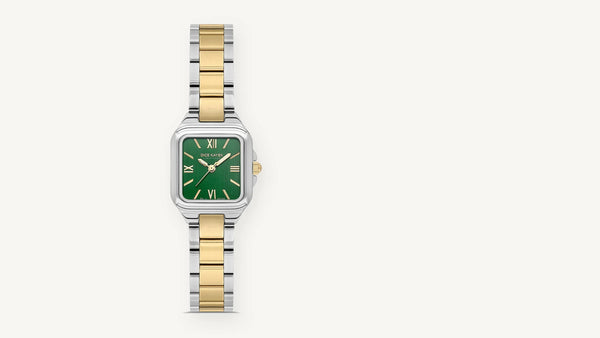
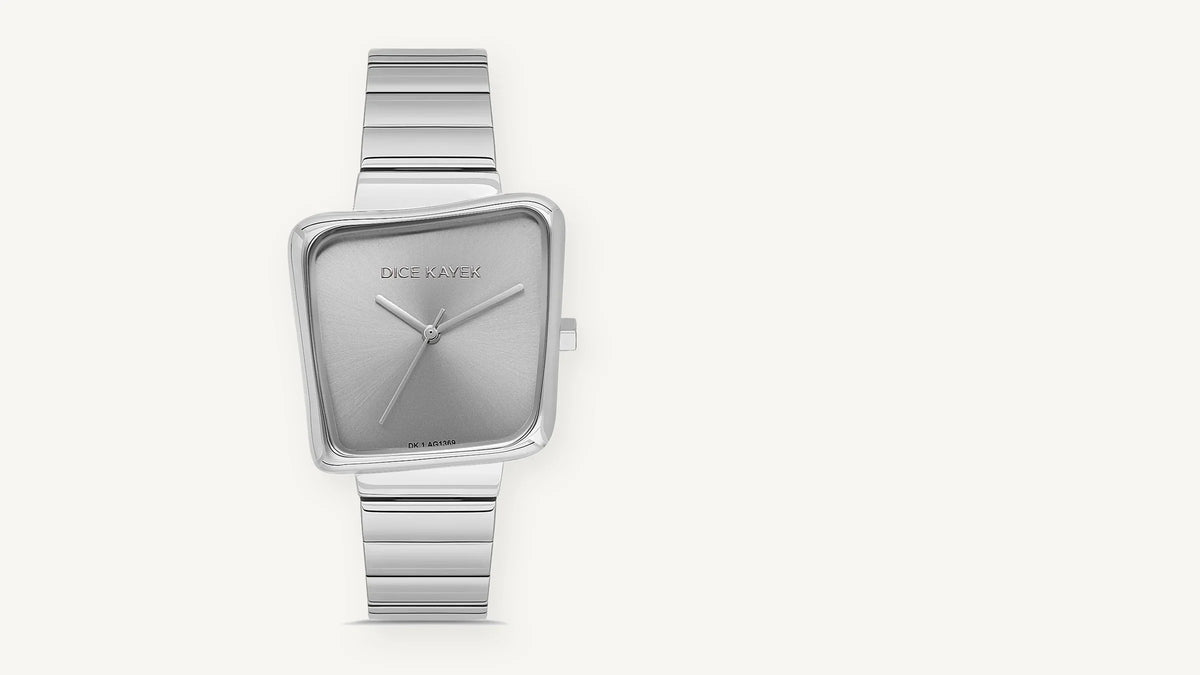
A selection of 3 ATM steel bracelet models for the office and the city:
A steel bracelet copes with water, sweat and sun far better than leather; you can find these models in our steel bracelet watches collection. For buying criteria other than water resistance, see what to consider when choosing a women's watch.
Choose by water resistance
Find the model that suits how you live
The water resistance of every Dice Kayek model is listed in the technical specifications table on its product page. Shipping within Türkiye is free, and you can return your watch within 30 days of delivery.
Explore women's watches →Frequently asked questions
What does 5 ATM water resistance mean?
5 ATM is a water resistance rating showing that a watch withstood 5 atmospheres (roughly 50 metres) of static water pressure in a lab test without leaking. It does not mean a 50-metre dive; it covers rain, hand washing, splashes and brief contact with calm water.
How many metres is 5 ATM?
5 ATM corresponds to the pressure of a water column of roughly 50 metres, which is why it is also marked "50 M" or "5 BAR" on the case. This is a test pressure, not a usable diving depth.
Is 5 ATM water resistance good?
It is a good safety margin for everyday use: it allows relaxed wear in rain, sweat, hand washing and splashes. It is not enough for regular swimming, jumping into water or diving; for those, a rating of 10 ATM or above should be chosen.
Can you wash your hands with a 3 ATM watch?
Yes, a 3 ATM watch withstands the brief splashes that happen while washing your hands. Do not submerge the watch, do not let soapy water stay on it, and dry it with a soft cloth afterwards. For longer contact such as washing dishes, it is safer to take the watch off.
What is the difference between ATM and bar?
In watchmaking there is no practical difference: 1 ATM is roughly equal to 1 bar and to a 10-metre column of water. Manufacturers write the same rating in different units; 5 ATM, 5 BAR and 50 M describe the same test value.
What does water resistant mean, and is it the same as waterproof?
Water resistant means the watch does not let water in up to a certain test pressure. Waterproof is not used for watches, because no watch stays waterproof in all conditions and indefinitely; gaskets wear over time.
Can you swim in the sea with a 5 ATM watch?
It is tested to withstand brief contact with a calm sea; however, walking into waves, jumping into the water and swimming for long periods are not recommended. Rinse the watch in fresh water and dry it after the sea. If you swim in the sea regularly, a watch rated 10 ATM or above is more suitable.
What does 10 ATM water resistance mean?
10 ATM shows that the watch did not let water in during a test equivalent to roughly 100 metres of water pressure. It is considered suitable for regular swimming in a pool or the sea; scuba diving requires a watch that meets the diving watch standard (ISO 6425).
Does water resistant to 50 metres mean you can dive to 50 metres?
No. The 50-metre figure is the water-column equivalent of the test pressure applied with still water in a laboratory. In real life water moves and momentary pressure rises, so you do not dive with a watch labelled 50 metres.
Does a watch's water resistance decrease over time?
Yes. The gaskets around the case back, the glass and the crown lose elasticity with heat, chemicals and time, and knocks can affect the case. Having the gasket checked whenever the case is opened, for example during a battery change, helps maintain water resistance.
How is the water resistance rating written on a watch?
The value is usually written on the case back as "5 ATM", "5 BAR", "50 M" or "WATER RESISTANT 50M"; some models also show it on the dial. On Dice Kayek models, the exact value is listed in the technical specifications table on the product page.
Do hot water and steam damage a watch's gaskets?
Yes. Heat expands gaskets and reduces their elasticity, and steam gets in more easily than liquid water. That is why, whatever the water resistance rating, it is best to take the watch off in a hot shower, sauna, hammam or hot tub.
Can you wear a 3 ATM watch while washing your face and forearms?
Brief water contact and splashes on the wrist while washing your face and forearms are the kind of contact a 3 ATM watch can withstand. Still, it is safer not to hold the watch directly under the tap, to slide it slightly up the arm while washing, and to dry it afterwards.
Related guides: How to Clean a Watch
About this article
Prepared by: Dice Kayek Timepieces · Last updated: 16 November 2026
The technical information in this guide is based on Dice Kayek Timepieces product specifications and on manufacturers' published user manuals. For exact values, see the technical specifications table on each product page; prices and stock are read live.
Sources: ISO — ISO 22810 announcement · Citizen — Water resistance · Seiko — Water resistance FAQ